

I grew up in a household where passing the peas was never just passing the peas. It was “peas be with you,” “peas and thank you,” and, on ambitious nights, “I’m feeling un-peas-ed by this gravy situation.” So I have a soft spot for any word with a secret history, especially the kind that began life as a perfectly ordinary human being.
Those words are called eponyms, which is a fancy way of saying “a word named after a person.” Here are 15 everyday English words you probably use without realizing you are casually name-dropping.
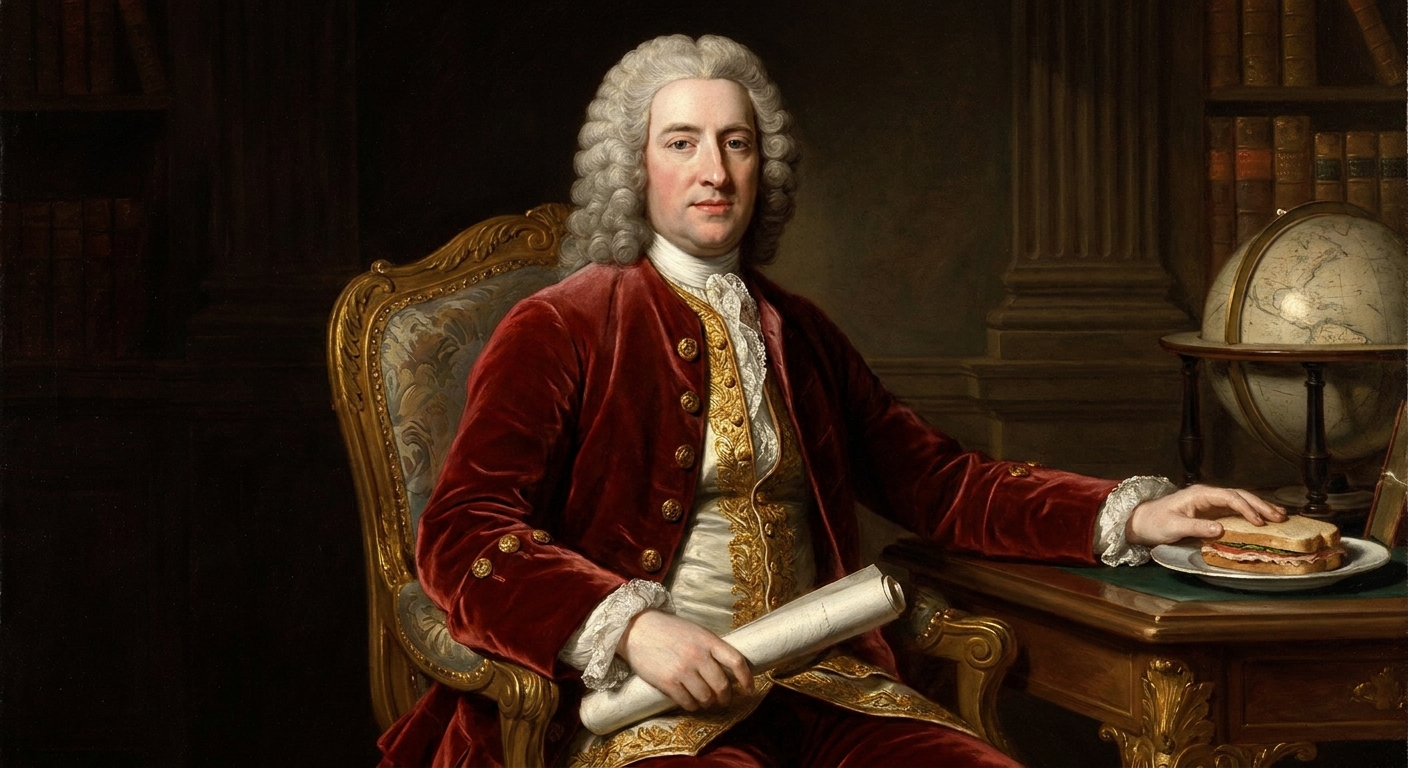
1) Sandwich
Named after: John Montagu, 4th Earl of Sandwich
According to a popular story, Montagu wanted a meal he could eat without pausing a long session at the card table, so meat was tucked between slices of bread. The legend is hard to prove, but early uses of the word do tie the idea to the Earl’s title. Either way, the name stuck, and now “sandwich” covers everything from cucumber tea triangles to towering deli monuments.
2) Boycott
Named after: Captain Charles Boycott
In 1880 Ireland, Captain Boycott was a land agent whose treatment of tenants sparked organized social and economic shunning. In the wider context of the Irish Land War, people refused to work for him, trade with him, or even talk to him. Newspapers picked up the story, and his surname became the word for collective refusal.
3) Silhouette
Named after: Étienne de Silhouette
Silhouette was a French finance minister associated with austerity and penny-pinching. His name became shorthand for cheap fashion and cut-price tastes, including simple profile portraits made as paper cutouts. Over time, the name slid onto the outline style itself, no budget meeting required.
4) Guillotine
Named after: Joseph-Ignace Guillotin
Guillotin did not invent the device, but he advocated for a standardized, supposedly more humane method of execution during the French Revolution. The machine became strongly associated with his name anyway, which is a reminder to be careful what you champion, historically speaking.
5) Braille
Named after: Louis Braille
Blinded as a child, Louis Braille developed the tactile writing system that bears his name, based on patterns of raised dots. Braille transformed literacy and access for blind readers around the world, and the word remains both a tribute and a tool.
6) Diesel
Named after: Rudolf Diesel
Rudolf Diesel designed the compression-ignition engine that now carries his name. “Diesel” originally points to the engine type, and in everyday use it also became the label for the fuel commonly used in it, even though diesel engines can run on more than one kind of fuel. Language loves a shortcut almost as much as it loves a catchy surname.
7) Saxophone
Named after: Adolphe Sax
Inventor Adolphe Sax created the saxophone in the 1840s, aiming for an instrument that could bridge the power of brass with the agility of woodwinds. His surname plus “phone” (sound) gave us a word that now practically sounds like jazz clubs and marching bands.
8) Nicotine
Named after: Jean Nicot
Jean Nicot was a French diplomat who helped popularize tobacco in France during the 16th century. Later, when scientists identified the compound responsible for tobacco’s addictive kick, his name got attached to it. Not the sort of legacy you would request, but history rarely asks first.
9) Pasteurize
Named after: Louis Pasteur
Louis Pasteur’s work on microbes and fermentation led to the heating process that kills harmful pathogens in foods like milk. “Pasteurize” is one of those eponyms that feels almost too neat, like a word that shows up wearing a lab coat.
10) Cardigan
Named after: James Brudenell, 7th Earl of Cardigan
The cardigan is commonly said to be named for the Earl of Cardigan, a British military figure from the Crimean War era. The story goes that a knitted, open-front garment associated with his regiment’s look picked up the title as a label. Today it is worn by everyone from office workers to toddlers who refuse coats on principle.
11) Maverick
Named after: Samuel Maverick
Samuel Maverick was a Texas rancher said to have refused to brand his cattle. Unbranded cattle became “mavericks,” and the word broadened into its modern sense: an independent-minded person who does not follow the herd. It is one of those metaphors that still does its job without needing a footnote.
12) Mesmerize
Named after: Franz Mesmer
Franz Mesmer promoted the idea of “animal magnetism,” an early and controversial theory related to trance states. Even after the science moved on, his name stayed behind as “mesmerize,” meaning to captivate or hold someone’s attention as if under a spell.
13) Algorithm
Named after: Muhammad ibn Musa al-Khwarizmi
This one is a linguistic time-traveler. Al-Khwarizmi (pronounced roughly al-khwa-REEZ-mee) was a Persian mathematician whose works influenced European mathematics. His name was Latinized as “Algoritmi,” which fed into “algorism” (a word for arithmetic), and later reshaped into “algorithm,” likely nudged by the familiar word “arithmetic.” Now it is indispensable in a world where your phone can predict your next snack craving.
14) Sideburns
Named after: Ambrose Burnside
General Ambrose Burnside’s distinctive facial hair made an impression: thick whiskers down the cheeks connected to a mustache. The style was originally called “burnsides” and then flipped to “sideburns,” which sounds like it belongs in a comedy sketch, yet here we all are using it sincerely.
15) Fahrenheit
Named after: Daniel Gabriel Fahrenheit
Fahrenheit, a physicist and instrument maker, developed a temperature scale that became standard in several countries, including the United States. His surname lives on every time someone announces it is “ninety-something” and pretends that is normal. In scientific writing you will often see the unit written in lowercase, but the person’s name is still very much a capital letter situation.
Quick cheat sheet
| Word | Person | What happened |
|---|---|---|
| sandwich | John Montagu | A handy meal got tied to a title |
| boycott | Charles Boycott | Organized shunning turned into a verb |
| silhouette | Étienne de Silhouette | Penny-pinching became an outline style |
| guillotine | J.-I. Guillotin | Advocacy led to lasting association |
| braille | Louis Braille | Tactile reading system honored its creator |
| diesel | Rudolf Diesel | Engine type named for its designer, then the fuel label followed |
| saxophone | Adolphe Sax | Inventor’s name fused into the instrument |
| nicotine | Jean Nicot | Tobacco promoter lent his name to a compound |
| pasteurize | Louis Pasteur | Food-safety process bears the scientist’s name |
| cardigan | Earl of Cardigan | A garment style is commonly linked to a title |
| maverick | Samuel Maverick | Unbranded cattle became a metaphor |
| mesmerize | Franz Mesmer | A controversial theory left a useful verb |
| algorithm | al-Khwarizmi | Name became “algorism,” then evolved into “algorithm” |
| sideburns | Ambrose Burnside | A hairstyle name flipped end to end |
| fahrenheit | Daniel Fahrenheit | A temperature scale turned into daily small talk |
Why eponyms stick
Eponyms survive because they are efficient little stories. A name is memorable, and once it attaches to an invention, a trend, or a headline-making moment, it can outlast the person who inspired it.
If you enjoy this kind of trivia, our Trivia guide is full of the same “wait, that is real?” energy. And if you want more word-history fun with a mischievous grin, you might also like our stroll through old English insults and their surprisingly petty backstories.
Mini FAQ
What is an eponym?
An eponym is a word that comes from a person’s name. Sometimes it is a surname (like boycott), sometimes a title (like sandwich), and sometimes it is a longer historical name that changed shape over time (like algorithm).
Are all these words still capitalized?
Most eponyms start capitalized, then often become lowercase once they feel like everyday vocabulary. We do not typically capitalize sandwich or maverick. With scientific units, capitalization can get picky: you capitalize the person (Fahrenheit), but you may see the unit or scale written in lowercase depending on the style guide.
What is the difference between an eponym and a brand name?
An eponym is named after a person. A brand name is a trademarked product or company name. Some brand names also become everyday words, but that is a different (and legally fussier) story. And just to keep the family tree straight, words can also be named after places (toponyms) or peoples (demonyms), which is its own rabbit hole entirely.