

I grew up in a house where dinner conversation was basically a competitive sport: whoever could twist a word first got the last bread roll. So it makes perfect sense that, years later, I still get a warm glow from a sentence that goes spectacularly, wonderfully wrong.
Retro games are a gold mine for that kind of joy. Limited screen space, tiny budgets, and developers who were busy inventing whole genres did not always leave room for a fluent editor’s second pass. The result was accidental poetry, the kind that launched a thousand forum posts and one very confused generation of kids (me included) who thought English simply worked differently inside a cartridge.
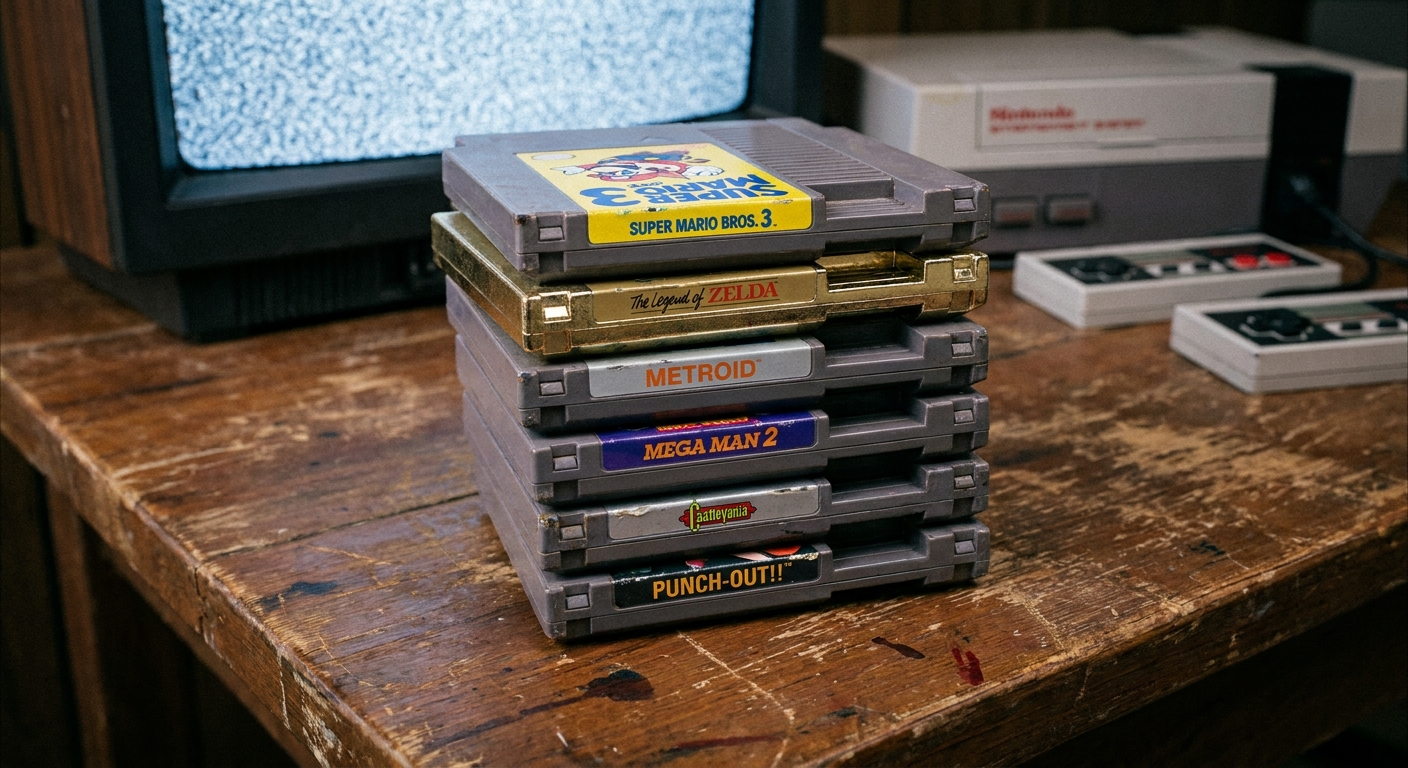
Why old localization got weird
Before we jump into the greatest hits of linguistic chaos, here are the main reasons these lines happened in the first place.
- Literal translation. Translating word-for-word instead of meaning-for-meaning, especially when idioms are involved.
- Missing context. Translators sometimes received isolated strings with no scene, no character notes, and no idea whether a line was a warning, a joke, or a victory speech.
- Space limits. Older systems had strict character counts. English also tends to be longer than Japanese, so corners got cut.
- No native editor pass. Many games simply did not have a final proofread by a fluent speaker.
- Encoding quirks. Fonts and character sets could cause odd spacing, missing punctuation, or forced abbreviations.
One quick definition, just so the list is playing fair: when I say “translation fails,” I mean a mix of true mistranslations, typos that slipped through, and awkward-but-intentional localization choices that sound hilarious out loud.
If you like this kind of language misfire in general, my other happy place is the world of near-misses like eggcorns and mondegreens. I wrote about those here: /eggcorns-vs-mondegreens/.
15 classic translation fails
These are the lines that earned a permanent spot in the Hall of Fame of Unintentional Comedy. I’m focusing on the retro era and early localization vibes, where the mistakes tend to be pure and unfiltered.
1) “All your base are belong to us” (Zero Wing)
Why it’s funny: It sounds like a robot tried to mug you with a phrasebook.
The linguistic slip: A mix of broken tense and agreement. In English, “base” would normally be pluralized as “bases,” and “are belong” doubles up on verb forms. This is classic literal translation plus weak proofreading.
2) “You have no chance to survive make your time” (Zero Wing)
Why it’s funny: It reads like a fortune cookie written by a stressed-out stopwatch.
The linguistic slip: Missing punctuation and an odd verb choice. Without context, it’s easy to grab the wrong meaning of a familiar phrase, and the sentence collapses like a cheap lawn chair.
3) “Somebody set up us the bomb” (Zero Wing)
Why it’s funny: It makes “set us up” sound like assembling a piece of flat-pack furniture.
The linguistic slip: Incorrect object placement and phrasal verb handling. “Set us up” is an idiom meaning frame or betray. The inserted “the bomb” turns it into nonsense. This is what happens when an idiom gets translated as if every piece is a separate Lego brick.
4) “I am Error” (Zelda II: The Adventure of Link)
Why it’s funny: It is either a confession, a philosophy, or the title of an indie album.
The linguistic slip: This one is probably not a translation error so much as a context surprise. “Error” is likely a name, paired with another character named “Bagu” in the same town, both referencing computer terms. But to an English-speaking kid, it reads like a system message achieved personhood.
For more on how tiny shifts in wording create big confusion, I also love collecting malapropisms: /60-funny-malapropism-examples/.
5) “Conglaturation !!!” (Ghostbusters, NES)
Why it’s funny: It is “congratulations,” but as seen in a funhouse mirror.
The linguistic slip: Spelling plus over-punctuation. This is a straightforward typo that apparently survived every step of production. It is a reminder that, in early game pipelines, the last person to touch the text might have been the person who least wanted to.
6) “What a horrible night to have a curse.” (Castlevania II: Simon’s Quest)
Why it’s funny: It sounds like a diary entry from Dracula’s disappointed neighbor.
The linguistic slip: Awkward collocation. English speakers typically “are under a curse” or “have been cursed.” “Have a curse” is grammatically possible, but unnatural. This is a near-literal rendering of a phrase that probably made perfect sense in the source language’s structure.
7) “A winner is you.” (Pro Wrestling, NES)
Why it’s funny: It congratulates you the way a stern coach labels a sandwich.
The linguistic slip: Article and predicate mismatch. English usually says “You are a winner,” or “You win.” The translated structure is closer to languages that use a “X is you” pattern for emphasis. It’s not incomprehensible, but it’s syntactically alien in a way that makes it instantly quotable.
8) “You were almost a Jill sandwich!” (Resident Evil)
Why it’s funny: It takes a life-or-death moment and adds deli counter energy.
The linguistic slip: Tonal mismatch more than grammar. The line is perfectly understandable English, but it lands weird because it is such a specific metaphor shoved into a high-stakes scene. This is one of those early localization moments where the meaning makes it across, but the vibe arrives wearing somebody else’s clothes.
9) “You spoony bard!” (Final Fantasy IV)
Why it’s funny: It is an insult that sounds like it belongs in a Victorian kitchen.
The linguistic slip: This one is often discussed as a localization choice rather than a straight mistranslation. The team reached for an archaic English insult to keep the melodramatic flavor with limited space. It is a reminder that “translation” is often “rewriting with constraints.”
10) “The truck have started to move!” (Metal Gear, NES)
Why it’s funny: It delivers urgency with the grammatical confidence of a panicked forklift.
The linguistic slip: Subject-verb agreement. English needs “The truck has started to move.” It is a small error, but in a tense stealth moment, it is the kind of tiny wobble that turns drama into meme fuel.
11) “I feel asleep!!” (Metal Gear, NES)
Why it’s funny: It makes sleep sound like a jacket you accidentally tried on.
The linguistic slip: Confusion between “fall asleep” and “feel sleepy.” The translator found words that orbit the idea, but the verb phrase is the wrong shape in English. The result is charmingly wrong in the exact way a rushed text box can be.
12) “Congraturation. This story is happy end.” (Ghosts ’n Goblins)
Why it’s funny: It feels like a fairy tale being told by a toaster that means well.
The linguistic slip: Spelling, articles, and a phrase that never quite becomes an English sentence. “Happy end” is a literal rendering of an idea that English would usually express as “happy ending.” Also, you will see this quote floating around with different punctuation and spacing depending on the version and how it was transcribed, but the spirit is always the same: optimistic, triumphant, and grammatically untethered.
13) “This guy are sick.” (Final Fantasy VII)
Why it’s funny: It is a tiny grammatical stumble in the middle of a very serious moment, which is basically catnip for anyone who grew up reading RPG text boxes like sacred scripture.
The linguistic slip: Subject-verb agreement. English wants “This guy is sick.” This exact wording is commonly remembered as part of the Final Fantasy VII translation hall of fame, even though quotes like this can get paraphrased, misremembered, or vary by version and retranslation. Either way, it captures the same retro RPG energy: one little verb form, and suddenly the drama has a squeaky wheel.
14) “You must defeat Sheng Long to stand a chance.” (Street Fighter II)
Why it’s funny: It reads like the game is hiding a secret boss, and it sent a whole generation on a side quest fueled entirely by hope.
The linguistic slip: The translation oddity is real, and it appeared in early English Street Fighter II ending text (most often associated with Ryu). “Sheng Long” shows up like a proper name, even though most players understood it as pointing, somehow, at Ryu’s Shoryuken and its “dragon” meaning.
How, exactly, “Sheng Long” got there is one of those gaming-lore knots that gets retold a dozen ways. You will often see it explained as a misread or over-literal rendering of “rising dragon” ideas rather than a neat, official pipeline from one writing system to another. What matters for our purposes is the effect: the line frames it as someone you can “defeat,” and that was all it took to make players assume they were missing a character.
Then the legend got gasoline poured on it: a gaming magazine famously ran an April Fools’ joke about unlocking “Sheng Long” as a secret boss, and it worked so well because the original line already had that perfect early-localization whiff of hidden content.
15) “Master of unlocking” (Resident Evil)
Why it’s funny: It sounds like a ceremonial title awarded by a secret society of doorknobs.
The linguistic slip: Unnatural phrasing and noun choice. English would normally go with “lock expert,” “key specialist,” or just “You’re great at picking locks.” But “master of unlocking” lands as this oddly formal, almost mystical job description. It is completely understandable, and emotionally baffling, which is the sweet spot where a line stops being dialogue and becomes a forever-quote.
Why these lines stick
If you squint a little, you can sort most famous translation fails into a few buckets:
- Subject dropped or implied. Works fine in some languages, reads like a stage direction in English.
- Verb form confusion. Mixing “be” verbs with main verbs, or grabbing the wrong tense for a dramatic moment.
- Idiom translated literally. “Set us up” becomes “set up us,” and suddenly nobody knows what is being assembled.
- Articles and plurals missing. “A,” “the,” and plural “-s” are small, but English uses them as meaning markers.
- Names and terms drifting. A romanization wobble, a half-remembered move name, a translator working from a list, and suddenly a whole fandom is chasing ghosts.
In my brain, these are cousins of classic English hiccups like “their, there, they’re.” Tiny forms, big consequences. If you want a refresher with fewer explosions and more apostrophes, I have you covered: /their-there-or-theyre-explained/.
Do modern games still do this?
Less often, but it still happens. Today you usually have larger localization teams, style guides, terminology databases, and a proper editor pass. The funniest modern “fails” are more likely to be:
- Out-of-context subtitle timing (a serious line paired with a character doing something ridiculous).
- Auto-translation artifacts in user-generated content or quick live-service updates.
- Regional phrasing clashes where something correct in one variety of English sounds odd in another.
Honestly, I miss the chaotic innocence of the old days sometimes. Not because I want anyone’s work to be sloppy, but because these mistakes were the accidental folk songs of gaming. We all learned them, repeated them, and laughed together.
Translation and localization
Translation is converting words from one language to another. Localization is adapting meaning, tone, jokes, cultural references, and constraints (like character limits) so the new audience gets the intended experience.
Most legendary retro “translation fails” are really localization pipeline fails: not enough context, not enough time, and not enough space. The lines become memes because they are close enough to human language to be recognizable, but just far enough away to be magical.
Also worth saying out loud: not every “fail” is a fail. Some weirdness is a deliberate choice, whether that is censorship, kid-friendly smoothing, or just a translator trying to land a joke with one hand tied behind their back.
If you enjoy pop culture language oddities like this, you can browse more in our Pop Culture guide: /guide-pop-culture/.