

I grew up in a home where passing the peas was not just passing the peas. It was also a high-stakes audition for whoever could twist a sentence into something groan-worthy before dessert. So it is no surprise that anagrams feel like home to me: take perfectly innocent letters, rearrange them, and suddenly you have got a joke hiding inside a name like a whoopee cushion under a church pew.
An anagram is a word or phrase formed by rearranging the letters of another. No new letters. No letter left behind. Just a neat little linguistic snow globe you shake until a funnier scene appears.
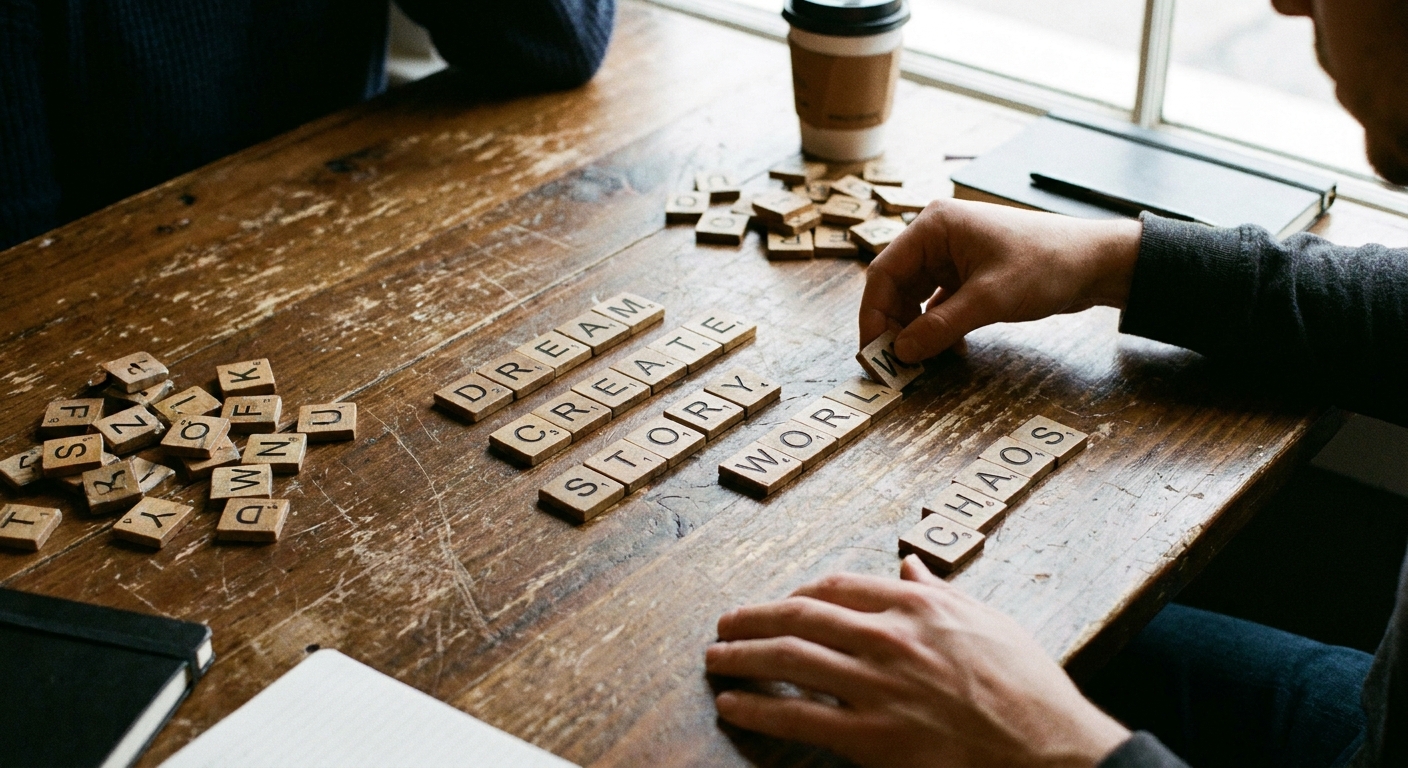
What makes an anagram funny
Not every anagram lands. Some are technically correct but emotionally similar to a wet sponge. Comedy anagrams usually hit at least one of these notes:
- Surprise: The result feels wildly different from the original.
- Specificity: Vague is not funny. A crisp image is.
- Character reveal: It sounds like a secret truth about the person or thing.
- Misbehavior: Mild silliness, harmless mischief, or a playful insult.
- Sound: If it is fun to say out loud, it is halfway to funny.
My personal gold standard is when the anagram feels like it was waiting there the whole time. Like the letters were quietly plotting.
The ground rules
- Use all the letters from the original.
- Use each letter the same number of times.
- Spaces and punctuation do not count, but letters do.
- Capitalization does not matter.
- If you want an easier time, choose targets without lots of tiny glue-words. If your target phrase includes a, an, or the, those letters still have to show up somewhere in your finished anagram.
If you want to be strict, you can also forbid abbreviations, foreign words, and creative spellings. If you want to be funny, you can relax a tiny bit and still sleep at night.
How to build a funny anagram
I do crosswords in pen, which is my way of telling you I make poor choices confidently. For anagrams, though, pencil is allowed. Here is the process that works for me.
1) Pick your target
Names, book titles, and common phrases work best because readers recognize them instantly. The more familiar the original, the bigger the laugh when it flips.
2) Write the letters out clearly
Remove spaces and punctuation, then write the letters in a line. If it is long, group them into 3 to 5 letter chunks so you do not lose your place.
3) Hunt for juicy letter clusters
Comedy often starts with spotting easy building blocks:
- -ing, -ed, -er, -ly
- Common pairs like th, ch, sh, oo, ea
- Oddball, high-value letters like w, k, z, x (they force weird words, which is a gift)
4) Choose a comedic angle
Before you rearrange everything, decide what kind of joke you want:
- Compliment: sweet and family-friendly
- Roast: gentle, never cruel
- Absurd image: hamsters, capes, and courtroom drama
- Secret biography: the letters confess something
5) Build the punchy words first
Start with the words that carry the joke. You can fill in glue-words later like a, the, my, in.
6) Check your letter math
When you think you have got it, count letters. One missing s can turn a masterpiece into a near-miss, and near-misses are how villains are born.
A fast way to double-check
If you want a simple method that is almost obnoxiously reliable, alphabetize the letters in both phrases and compare them.
Example: DORMITORY and DIRTY ROOM
- DORMITORY → DIMORRTOY
- DIRTYROOM → DIMORRTOY
Same pile of letters, same counts. Clean as a whistle. A slightly smug whistle.
A quick demo
Here is what this looks like in real life, using a small target.
Target: “THE EYES”
I strip spaces and write it out: THEEYES.
Now the satisfying part. I can see THEY right away, which leaves EES for SEE. Put it together and you get:
- The eyes → They see
That is the sweet spot: short, clean, and it sounds like it was always there.
Name anagrams
Names are anagram gold because they feel personal. That also means you should keep it kind. A good rule is to aim for:
- Playful over mean
- Goofy over insulting
- PG over anything you would not read aloud to a grandma holding a casserole
Techniques that help
- Add a title: “Sir”, “Dr”, “Captain” can sometimes be formed from the letters and gives instant comic flavor.
- Use a mini story: turn the anagram into a tiny scene like “Bakes pies” or “Sings badly”.
- Lean into odd letters: if the name has a Q, you are basically obligated to create mischief.
If you are doing an anagram for someone in the room, my advice is to show them the sweet version first. Keep the spicier one in your back pocket like a responsible gremlin.
Single-word anagrams
Sometimes the funniest flip is a single word turning into a tiny phrase that tells on it. No drama, no plot, just letters quietly betraying their original job.
Verified examples
These are letter for letter anagrams, with no mystery letters sneaking in through a side door.
- ASTRONOMER → MOON STARER
- LISTEN → SILENT
If you enjoy pop-culture language more generally, the site’s Pop Culture guide is a nice rabbit hole that does not require snacks, but strongly encourages them.
Everyday anagrams
The funniest anagrams are often born from ordinary phrases because the original is so bland you would never suspect it has a clown wig inside it.
Verified examples
- ELEVEN PLUS TWO → TWELVE PLUS ONE
- SCHOOLMASTER → THE CLASSROOM
If you like humor that comes from tiny tweaks to everyday wording, you might also enjoy One Comma, Total Chaos.
Famous anagrams
These are the classics people pass around because the letters line up so neatly it feels like the universe is doing stand-up. I also like them because they are a reminder to double-check your work. The internet loves a near-anagram the way a seagull loves an unattended french fry.
- Clint Eastwood → Old West Action
- William Shakespeare → I am a weakish speller
- Tom Marvolo Riddle → I am Lord Voldemort
Unintentional anagrams are also a gentle reminder that English is a playful little rascal. If you enjoy that general vibe, Funny English is where I keep the rest of my linguistic mischief.
Quick tips
- Shorter is usually funnier: A clean 2 to 5 word anagram often lands better than a long, wobbly sentence.
- Read it aloud: Your ears will catch clunkiness your eyes forgive.
- Avoid too many glue-words: If your anagram needs three “and”s to survive, it might be time for a rewrite.
- Use a concrete noun: “Goat,” “toaster,” “banjo” wins against “thing.”
- Be kind with names: The goal is giggles, not grudges.
Common pitfalls
Dropping a letter
Solution: write the letters in alphabetical order and cross them off as you use them. It feels nerdy because it is, and it works.
Getting stuck on repeats
Solution: tally the repeats before you start. If you have three Es and two Os, write it down where you can see it. Repeated letters are where most “close enough” anagrams go to die, because your brain will swear you still have an E left when you absolutely do not.
Ending with leftovers
Solution: start over and lock in different big words first. If you commit to a huge word too early, you can trap yourself into finishing with a sad little handful of leftover letters that only want to spell “hm.”
Making it too inside
Solution: pretend you are telling it to a stranger in line at the grocery store. If it needs a five-minute explanation, it is not a joke yet, it is homework.
A small challenge
If you want to practice, here are a few prompts plus solved examples that are, as written, letter-perfect.
Prompt: “Dormitory”
- Dormitory → Dirty room
Prompt: “The earthquakes”
- The earthquakes → That queer shake
Prompt: “Conversation”
- Conversation → Voices rant on
My only rule: if your final result sounds like a detective novel title or a snack food, you are doing it correctly.
FAQ
Are anagrams wordplay?
Absolutely. They are the rearrange-the-furniture wing of the wordplay mansion. If you like this sort of thing, the broader Puns and Jokes guide is a good companion read.
Do I need a generator?
No, but it can help, especially for long phrases. I still recommend doing the final shaping yourself. Comedy is in the choices: what you keep, what you toss, and what you emphasize.
Can anagrams be offensive?
They can, mostly because names are personal and wordplay can turn sharp quickly. If you are making an anagram about a real person, aim for warm, goofy, and unmistakably friendly.