

My childhood dinner table had two guaranteed “courses”: whatever was on the plates, and whatever was on my dad’s mind. The second one was usually a pun that made everyone groan so hard the peas rolled off their forks. Somewhere in that happy racket I met one of language’s neatest party tricks: palindromes, those sentences that read the same forwards and backwards (once you ignore spaces and punctuation). They are like verbal boomerangs. You throw them out, and they come right back to bonk you on the funny bone.
Below is a curated list of 40 mind-bending palindrome lines (some are full sentences, some are short phrases), followed by a simple, friendly guide to writing your own without needing a monocle or a secret society handshake.
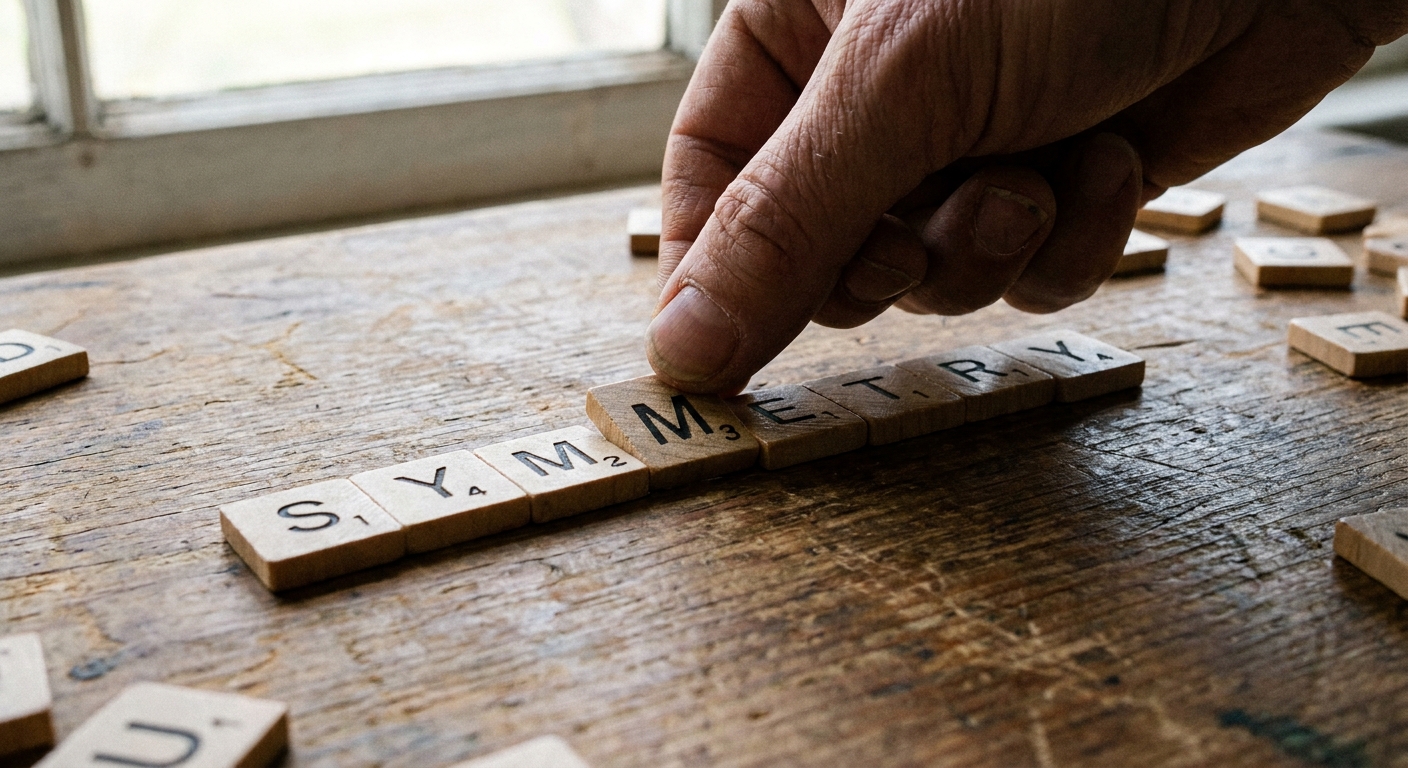
Before we begin: what counts as a palindrome?
When people share palindromes, they almost always mean the normalized version: you read letters only, and you ignore spaces, capitalization, punctuation, and apostrophes (curly quotes included).
- Counts: “Madam, I’m Adam.”
- Because we read it as: madamimadam
If you want the ultra-strict version where every space and comma must mirror perfectly, that is a niche hobby for people who also alphabetize their socks. I respect them. I am not them.
40 palindrome lines
These are presented in normal, readable form. All are palindromes under the standard “letters only; ignore spaces and punctuation” rule.
Classic crowd-pleasers
- Madam, I’m Adam.
- Never odd or even.
- Was it a rat I saw?
- Do geese see God?
- A man, a plan, a canal: Panama.
- Step on no pets.
- Eva, can I see bees in a cave?
- Mr. Owl ate my metal worm.
- Do nine men interpret? Nine men, I nod.
- No lemon, no melon.
Short and snappy
- Race fast, safe car.
- Too hot to hoot.
- Live not on evil.
- Top spot.
- Rats live on no evil star.
- Red rum, sir, is murder.
- Go hang a salami, I’m a lasagna hog.
- Rise to vote, sir.
- Sir, I demand, I am a maid named Iris.
- UFO tofu.
Dialogue and drama
- Madam, in Eden, I’m Adam.
- Are we not drawn onward, we few, drawn onward to new era?
- No sir, away! A papaya war is on.
- Won’t lovers revolt now?
- Now, sir, a war is won!
- Name no one man.
- Ah, Satan sees Natasha.
- Was it Eliot’s toilet I saw?
- Murder for a jar of red rum.
- Borrow or rob?
Food, animals, and wholesome chaos
- May a moody baby doom a yam?
- Lisa Bonet ate no basil.
- Was it a bar or a bat I saw?
- Dogma: I am God.
- Won’t I panic in a pit now?
- Ten animals I slam in a net.
- Straw? No, too stupid a fad; I put soot on warts.
- A nut for a jar of tuna.
- Taco cat.
- Was it a cat I saw?
Note: Not every palindrome has to be English. There are famous non-English palindromes too, and they are just as delightfully brain-bending.
How to write your own palindrome
I love palindromes because they feel like magic, but they are really more like carpentry. Measure, cut, sand, and try not to glue your fingers together.
Step 1: Pick a spine
Start with something simple and friendly that gives you room to build: a name (ADA, EVE), an object (TACO), or a theme word (LEVEL, ROTOR).
- Example spine: “EVE”
Step 2: Set your rules
Most people use “letters only,” which means you ignore spaces, capitalization, punctuation, and apostrophes. Decide whether you are also allowing numbers. Consistency saves you from the tragic fate of arguing with yourself at 11:47 p.m.
Step 3: Build outward
Write the spine in the center, then add letters and words to the left and right so they mirror.
A better tactic is to build with chunks you already know work, like “no” and “on,” “was” and “saw,” “evil” and “live.” These pairs are palindrome gold.
Step 4: Use mirror words
Keep a tiny list of reliable reversals. Here are a few that are exact:
- no ⇄ on
- was ⇄ saw
- live ⇄ evil
- stressed ⇄ desserts (a classic reverse pair, not a full palindrome by itself)
If a pair is not an exact letter-for-letter reversal, do not treat it like one. “Drawer” and “reward” are a classic almost-match that will betray you at the worst possible moment.
Step 5: Normalize and check
To verify your palindrome:
- Remove everything that is not a letter.
- Make everything lowercase.
- Write it backwards.
- Compare.
If you have ever done a crossword in pen, you already understand this emotional journey.
Step 6: Make it sound human
This is the part that makes palindromes funny. First you get the mirror working, then you massage it into an actual sentence that sounds like something a human might say on purpose.
Tip: Questions help. They give you structure, and the weirdness feels intentional. “Was it...?” is practically a palindrome trampoline.
Common pitfalls
- Too strict too soon: If you insist on perfect punctuation symmetry at the start, you will quit. Ignore punctuation until the end.
- Accidental extra letters: Tiny words like “a,” “I,” and “the” sneak in and wreck symmetry. Normalize and check often.
- Pronunciation traps: Palindromes are letter-based, not sound-based. “Knight” and “night” are not interchangeable here.
- Meaning paralysis: A palindrome can be delightfully silly. If it reads like a dream you had after eating spicy cheese, you are doing it right.
Try it: three challenges
If you want a gentle workout for your wordplay muscles, try these:
- Easy: Make a palindrome using “no” and “on.”
- Medium: Make a question that includes “was” and “saw.”
- Spicy: Make a palindrome that includes a person’s name, then make the sentence actually make sense.
If you need more language mischief after this, you might enjoy our Funny English guide or the collection of funny oxymorons we somehow say with a straight face. Different trick, same joy: words behaving badly in public.
Quick FAQ
Do palindromes have to be sentences?
Nope. Words (“level”), names (“Anna”), and even numbers (“1221”) can be palindromes. Sentences are just where the real circus animals come out.
Are there perfect palindromes?
Yes, if you define your rules. Most shared palindromes are perfect under the standard rule of using letters only and ignoring punctuation and spacing.
What is the longest palindrome?
There are extremely long constructed palindromes out there, but length is not the only measure of greatness. A short palindrome that makes someone laugh is a small masterpiece.