

I grew up in a house where a good pun was basically considered a vegetable. You had to have it at dinner whether you liked it or not. So when a TV catchphrase escapes the screen and starts turning up at school, at work, and eventually in my own mouth while I’m looking for the ketchup, I notice.
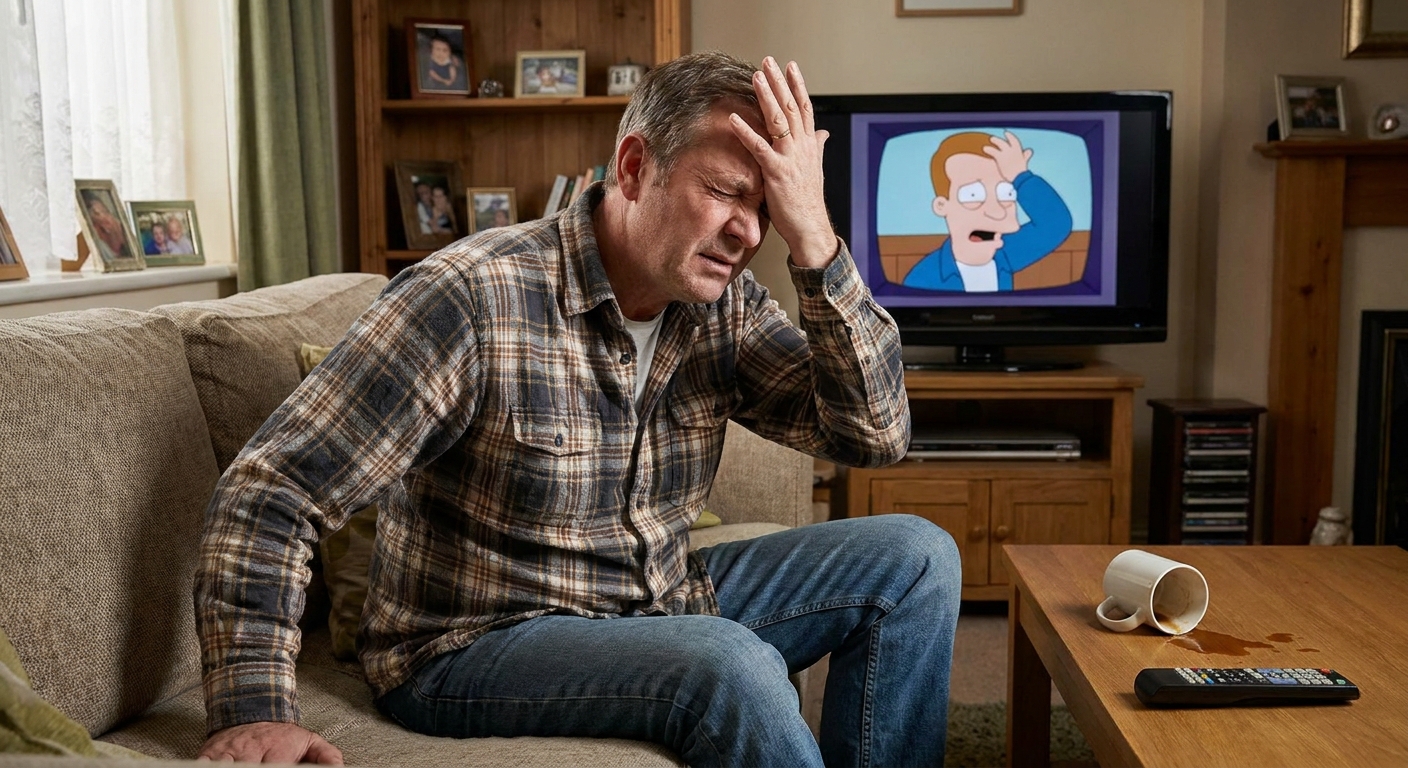
Some catchphrases are just quotable lines. Others become something sneakier: a handy little piece of everyday English. We stop “quoting” and start using. And before you know it, you’re saying “D’oh!” when you drop your keys, even if you couldn’t name a single episode.
How catchphrases become language
If you want to watch language evolve without reading a dusty textbook, just listen to a group chat. TV catchphrases become everyday speech for a few simple reasons:
- They are short and repeatable. Your brain likes a snack, not a seven-course meal.
- They label a feeling. The best ones name an emotion we regularly experience but rarely bother to describe.
- They fit anywhere. A phrase that works at home, at work, and in a supermarket checkout line is going to spread.
- They come with built-in acting. A catchphrase often includes rhythm, intonation, or a facial expression you can hear even when it’s typed.
Also, a small but important caveat: “everyday English” depends on your age, your country, and whether your daily life is mostly offline or mostly in a group chat with 47 reaction GIFs. Some of the phrases below are practically universal. Others live in specific generations or glorious little fandom pockets.
On Innocent English I usually chase wordplay from the grammar side, but pop culture has its own kind of linguistics. For more on how catchphrases and references travel, see our Pop Culture guide.
20 TV catchphrases we all use
Below are 20 lines that started as scripted moments and ended up as conversational tools. I’m focusing on how people use them now, not just where they came from.
1) “D’oh!” (The Simpsons)
What it became: a universal sound for “I made a tiny mistake and I’m annoyed at myself.” It’s practically punctuation at this point.
2) “Bazinga!” (The Big Bang Theory)
What it became: a tag for “gotcha” humor, especially when the joke is corny, obvious, or proudly over-explained.
3) “How you doin’?” (Friends)
What it became: a playful, knowingly cheesy greeting. Even when it’s said seriously, it is rarely fully serious.
4) “We were on a break!” (Friends)
What it became: shorthand for a relationship technicality. It’s handy for parodying any argument that hinges on a fine print detail.
5) “No soup for you!” (Seinfeld)
What it became: a comic way to deny something minor, like a snack, a favor, or the AUX cord.
6) “Yada yada yada.” (Seinfeld)
What it became: a socially acceptable fast-forward button for boring details.
7) “Not that there’s anything wrong with that.” (Seinfeld)
What it became: a self-conscious little disclaimer, usually deployed right after you realize you sound judgmental. It’s a verbal seatbelt.
8) “Suit up!” (How I Met Your Mother)
What it became: an exaggerated rallying cry for any plan, even if the plan is “go to the store” and the suit is sweatpants.
9) “Legendary.” (How I Met Your Mother)
What it became: ironic praise. It’s for truly great things, but even more for aggressively average things.
10) “That’s what she said.” (The Office)
What it became: a quick, juvenile punchline to accidental double meanings. It’s an entire joke format in six words.
11) “Bears. Beets. Battlestar Galactica.” (The Office)
What it became: a purposely random list to signal “I’m doing a bit right now.” It’s also a reminder that catchphrases do not always have to be practical. Sometimes they are just fun to deploy.
12) “Winter is coming.” (Game of Thrones)
What it became: a dramatic warning. It shows up for weather, deadlines, exams, family visits, you name it.
13) “Live long and prosper.” (Star Trek)
What it became: a friendly sign-off and a pop-culture blessing, often paired with the hand gesture.
14) “Resistance is futile.” (Star Trek: The Next Generation)
What it became: a nerdy, cheerful way to announce that something is inevitable. Often something tiny, like “yes, you are trying the dessert.”
15) “Book ’em, Danno.” (Hawaii Five-O)
What it became: a playful line for “wrap it up” or “we’re done here.” It’s best known from the original Hawaii Five-O era, which gives it that satisfying retro afterlife.
16) “Whatcha talkin’ ’bout, Willis?” (Diff’rent Strokes)
What it became: a humorous expression of disbelief. It works because it is specific but adaptable, like a tailored suit you can still wear with sneakers.
17) “Kiss my grits!” (Alice)
What it became: a cleaned-up way to sound offended without reaching for stronger language.
18) “Nanu nanu.” (Mork & Mindy)
What it became: a silly greeting for people who like their hellos with a side of weird.
19) “Ayyy!” (Happy Days)
What it became: a general-purpose exclamation, usually in a Fonzie-ish spirit. The spelling wobbles, the meaning does not.
20) “Did I do that?” (Family Matters)
What it became: a self-aware line after an accident, often used when the speaker absolutely did do that.
Notice something? Many of these are not “jokes” by themselves. They are tools. You can plug them into real life to express embarrassment, delight, sarcasm, warning, flirtation, or a very mild threat to withhold soup.
Why writers make catchphrases
In sitcoms, a catchphrase is a shortcut: it can signal character, mood, and a running joke in a single beat. It is also a memory device. If viewers can easily repeat it, they are more likely to remember the moment, the character, and the show.
There’s also a craft reason that makes my crossword-loving heart happy. Writers aim for a phrase with:
- Strong rhythm (easy to say quickly)
- Clear mouthfeel (sounds that feel satisfying, like “bazinga” or “yada yada”)
- Flexible meaning (usable outside the original plot)
- A built-in wink (it sounds like a “quote,” so people feel safe using it as play)
It’s not far from how other playful language spreads. If you enjoy the mechanics of that, our piece on portmanteaus we use daily scratches a similar itch.
The catchphrase life cycle
Catchphrases tend to follow a predictable journey:
- Birth: the line lands in an episode and viewers repeat it as a quote.
- Spread: it gets used in school hallways, offices, and family group chats.
- Mutation: people shorten it, remix it, or apply it to new situations.
- Normalization: it stops feeling like a quote and starts feeling like a regular expression.
- Either fossilization or immortality: it becomes a dated reference, or it sticks around as a permanent language tool.
“D’oh!” is a great example of immortality. You can hear it from kids who have never seen the early seasons, which is about as close to linguistic adoption papers as a TV sound can get.
Use them without being annoying
I say this with deep affection for humanity: catchphrases are seasoning. A little makes conversation delicious. Too much and your friends start looking for the exit.
- Match the room. Your grandparent might enjoy “Live long and prosper” more than “That’s what she said.”
- Use them as bridges, not barriers. If someone doesn’t know the reference, pick a phrase that still makes sense on its own.
- Let them breathe. Repeating a catchphrase over and over is how it turns from funny to furniture.
And if you do overuse them, just look at the group, shrug, and deploy a classic “Did I do that?” It won’t fix it, but it will be honest.
Mini FAQ
Are catchphrases “real” English?
If people use them to communicate meaning in everyday situations, they function as real language. Dictionaries tend to show up later, like a friend who arrives after the pizza is gone.
Why do some catchphrases vanish quickly?
They are too tied to a specific plot moment, too long, or too hard to reuse naturally. A phrase needs portability. If it can’t travel, it stays home.
Is this the same as slang?
Sometimes. A catchphrase can become slang if it becomes common and detached from the original show. Other times it stays a quote, clearly wearing its TV name tag.
What about non-sitcom TV?
Drama, sci-fi, and reality TV all produce catchphrases too. Sitcoms just have an advantage because they build repetition into the format.
A final thought
I love that TV catchphrases are a reminder that English is not guarded by a velvet rope. It’s more like a public park. If a phrase is useful, funny, and easy to carry, people will adopt it. Then they will hand it to the next person, and eventually nobody remembers who brought it in the first place.
And if you’ll excuse me, I’m off to spill something minor and say “D’oh!” like it’s my civic duty.
More clean pop-culture language fun lives in our Pop Culture guide, and if you want the broader mechanics of jokes that stick, hop over to The Anatomy of a Dad Joke.