

I grew up in a house where the dinner table had two main courses: whatever was on the plates, and whatever was on the words. Someone would say, “Pass the rolls,” and my dad would reply, “I can’t, they’re already on a journey.” Groans were currency. Riddles showed up too, usually when someone wanted to prove they were smarter than the peas.
Puns and riddles can feel like distant cousins at a family reunion. One shows up wearing a “Word Nerd” hat, the other arrives with a mystery wrapped in a question. But combine them and you get the best kind of joke: the one that makes people squint, solve, then sigh-laugh when the penny drops.
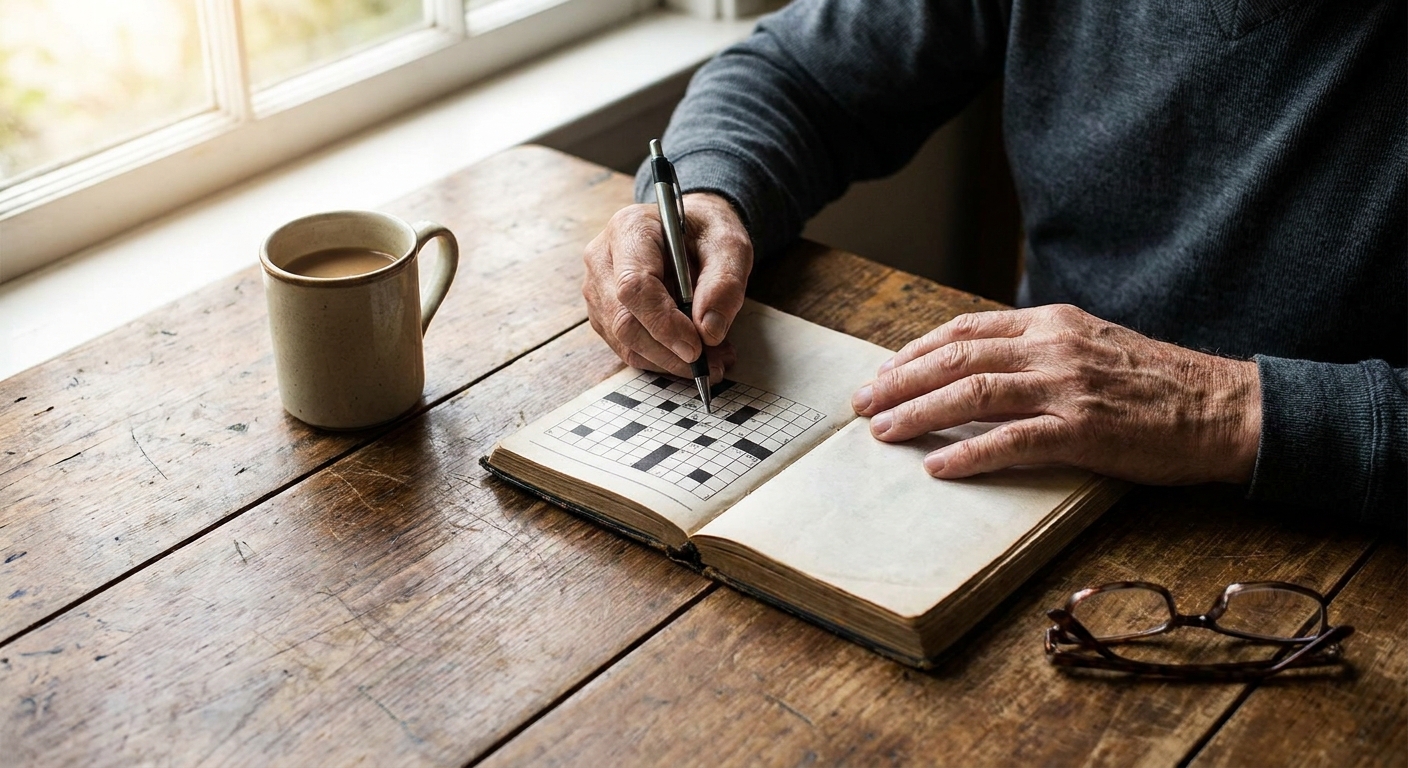
Puns vs. riddles: what is the difference?
What a pun is (the quick engine)
A standard pun runs on double meaning. It takes one word, sound, or familiar phrasing and lets it carry two ideas at once. Usually it’s fast. You hear it and the laugh arrives almost immediately, even if it is the reluctant kind that leaks out as a groan.
- Typical structure: setup, then a word (or phrase) with two meanings.
- Fuel source: homophones (sole and soul), near-homophones, and polysemy (one word with multiple meanings, like bark, pitch, or light).
- Payoff timing: instant or near-instant.
If you want a deeper tour of the pun pantry, I keep one stocked over in Puns and Jokes.
What a riddle is (the slow cooker)
A classic riddle runs on withheld information. It invites you to solve a small puzzle, often by interpreting language in an unexpected way. The laugh is not always the point, but when it is, the humor comes from the “Ohhh, I see what you did there.”
- Typical structure: question, misdirection, then an answer that reframes the question.
- Fuel source: ambiguity, lateral thinking, playful literalism.
- Payoff timing: delayed, because your brain has to take a lap first.
The big difference in one sentence
Puns surprise you with a word. Riddles challenge you with a question. A “pun-riddle” does both, and that is where the brain-teasing magic lives.
Why combining them works so well
When you mix puns and riddles, you get a joke with two gears:
- Gear 1 (riddle): pulls the reader into problem-solving mode.
- Gear 2 (pun): delivers the punchline as the solution.
It is the comedic version of hiding broccoli under melted cheese. You are doing something good for the brain, and people are still happy about it.
The basic recipe for a pun-riddle
Step 1: Pick a pun pair
Choose a word that can mean two things, or two words that sound alike.
- knight / night
- flour / flower
- sole / soul
- stationery / stationary
- bark (tree) / bark (dog)
Step 2: Choose which meaning to hide
Decide which meaning you want people to assume first. That is the misdirection.
Step 3: Write a question that points at the wrong meaning
Give details that strongly suggest the obvious answer, but still allow the pun meaning to fit.
Step 4: Reveal the answer using the pun as the click
The solution should feel fair. If the answer relies on a pun nobody could possibly predict, it stops being a riddle and becomes a small act of linguistic vandalism.
Step 5: Add a short kicker (optional)
A tiny follow-up line can turn a clever answer into a laugh.
Four structures to borrow
1) The definition swap
How it works: Ask for a definition, but make the “real” definition the pun.
Example:
Q: What do you call a flower that bakes bread?
A: A flour-ist.
This structure is especially friendly for kids and group games because the question tells you what category the answer lives in.
2) The literal interpretation
How it works: Use a phrase that normally has a figurative meaning, then solve it literally with a wordplay twist. Some of these are pun-adjacent, but they scratch the same itch.
Example:
Q: Why did the musician bring a ladder to rehearsal?
A: Because he wanted to reach the high notes.
That one lives in “dad joke riddle” territory, and if you enjoy that style, my whole philosophy is living over at The Anatomy of a Dad Joke.
3) The homophone lineup
How it works: Present a situation where two similar-sounding words could be the culprit, then reveal which “suspect” it was.
Example:
Q: What do you call a knight who only works after sunset?
A: A night-shift knight.
The fun here is that the answer is basically the riddle solution: “Oh, we were talking about night, not knight.”
4) The spelling trick
How it works: Make the solver notice spelling, spacing, or a tiny change.
Example:
Q: What word becomes shorter when you add two letters to it?
A: “Short.”
Not every riddle needs a pun, but when you do add one, make it a tidy little twist, not a tumble down the stairs.
Pun-riddles you can use
Feel free to borrow these for a car ride, a classroom warm-up, or a moment when the group chat has gone quiet and you want to test friendships. I added quick labels so you can see the mechanism, not just the groan.
- Q: I’m a kind of “room” with no doors and no windows, and I often show up on pizzas. What am I? (homophone-ish wordplay)
A: A mushroom. - Q: Why did the banker quit his job even though he liked math? (double meaning)
A: He lost interest. - Q: What has bark but no bite, and you can find it in a forest? (double meaning)
A: A tree. - Q: I’m something you can draw, and I can also cool you off on a hot day. What am I? (double meaning)
A: A fan. - Q: I help you write, and I am also a home for pigs. What am I? (double meaning)
A: A pen. - Q: I can help you start a campfire, and I can also help you meet your equal. What am I? (double meaning)
A: A match. - Q: I can be cracked without being broken, and I can be told without being said out loud. What am I? (double meaning)
A: A joke. - Q: I’m something you can book for a trip, and I’m also something you can read on the trip while you wait. What am I? (double meaning)
A: A book.
A few of these lean more riddle, a few lean more pun. That is normal. Think of it like seasoning. You want flavor, not a salt lick.
How to keep it fair
Keep the answer inside the question
A good riddle gives enough information that the solver can say, “I should have seen that.” If the pun requires a niche fact, it becomes a trivia question wearing a fake mustache.
Use one clean twist
One strong misdirection is better than three medium ones. When a joke needs multiple leaps, it starts to feel like homework.
Avoid the random-pun ending
If the pun does not connect to the setup, it feels stapled on. The best pun-riddles have a punchline that is also the solution.
Test it out loud
Pun-riddles are audio creatures. If it sounds clunky, simplify. If it is a homophone, make sure it actually sounds close enough in your accent that nobody needs a pronunciation debate.
Where to find raw material
- Everyday objects: keys, batteries, coffee, calendars, shoes.
- Animals: the pun possibilities are practically herd mentality. If you want a head start, I rounded up a whole zoo in Purr-fect Wordplay: Animal Puns for Any Species.
- Food: the English language is basically one big snack table. You can nibble through Baking Up Laughs: Food Puns for inspiration.
- Common confusions: misheard phrases and near-misses are pun-riddle gold. If you like language going slightly sideways, Eggcorns vs. Mondegreens is a delightful rabbit hole.
Mini workshop
Let’s say you start with a simple pun:
Pun: “I used to be a banker, but I lost interest.”
Now turn it into a riddle by hiding the key word and making it solvable:
- Pick the concept: interest (money vs. curiosity)
- Write the question with misdirection: suggest boredom, hide finance
- Reveal with the pun as the answer: keep it clean and fair
Riddle version:
Q: Why did the banker quit his job even though he liked math?
A: He lost interest.
Same wordplay, but now the listener has to connect the dots before the groan arrives. That is the sweet spot.
FAQ
Are pun-riddles okay for kids?
Absolutely, as long as the wordplay is clean and the vocabulary matches the room. In my experience, kids love being treated like capable solvers, and grandparents love any joke that does not require an apology tour afterward.
What is the easiest kind of pun-riddle to write?
Single words with two senses, plus simple homophones. Start with pairs like night and knight, pair and pear, or plane and plain, and write a question that makes one meaning feel obvious.
What if people guess it instantly?
Then you have written a pun with a riddle hat on, and that is not a failure. If you want more challenge, reduce the obvious clues, or add one extra detail that points away from the pun meaning.
One last truth
Puns are the spark. Riddles are the slow burn. Put them together and you get a joke that feels like a tiny game, and the prize is a laugh.
Now if you will excuse me, I have a crossword puzzle to finish in pen, which is either confidence or foolishness. Sometimes the difference is only one letter.