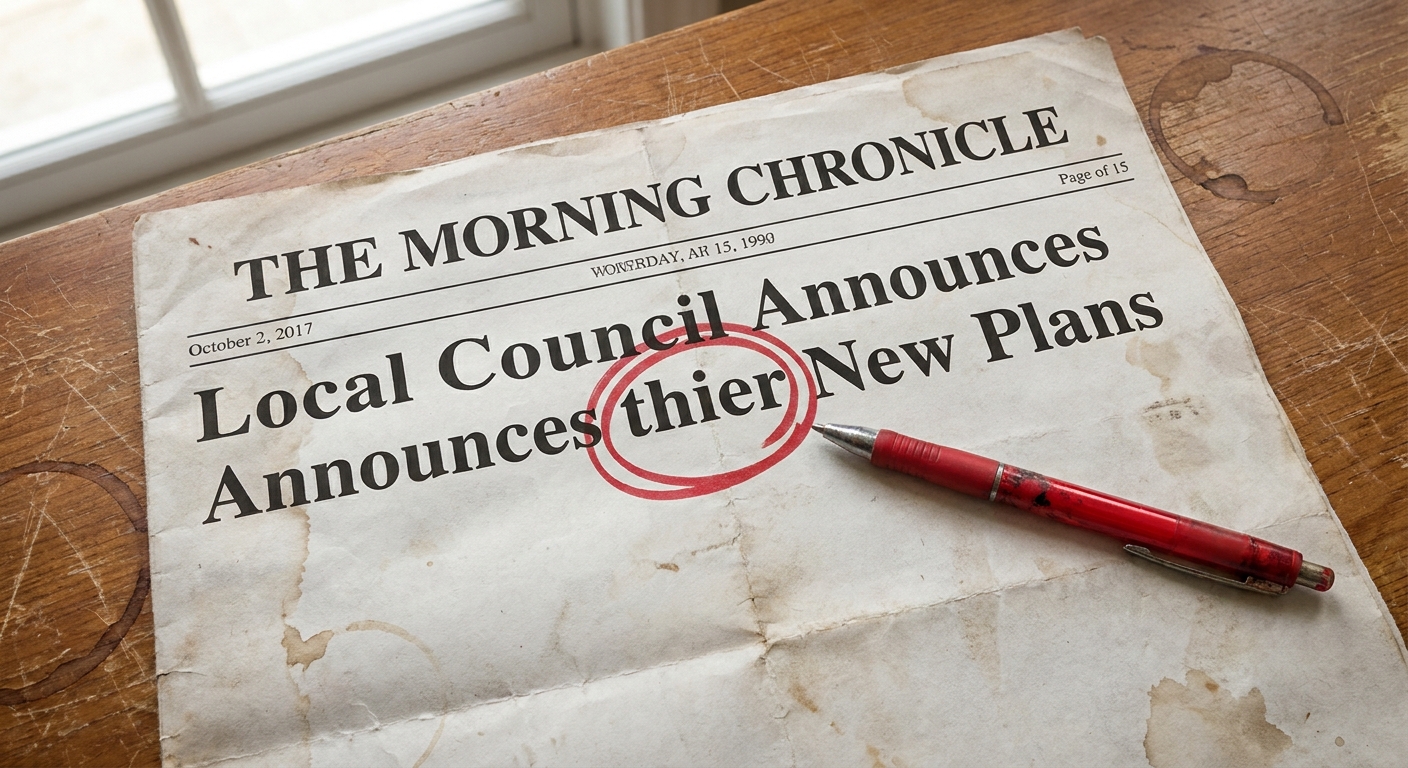

I grew up in a house where a misplaced letter was basically a dinner bell. Someone would misread a cereal box, my dad would pounce like a pun-hungry hawk, and the rest of us would groan in chorus. To this day, I am convinced the English language is held together by duct tape, good intentions, and one tired proofreader blinking at 2 a.m.
And sometimes that blink costs real money.
Below are three famous, real-world typo stories, plus the most common high-stakes zones where a small slip gets expensive fast. Some triggered lawsuits. Some wrecked a rollout. Some simply gave the world a gift: unintentional comedy, printed in ink like it meant it.
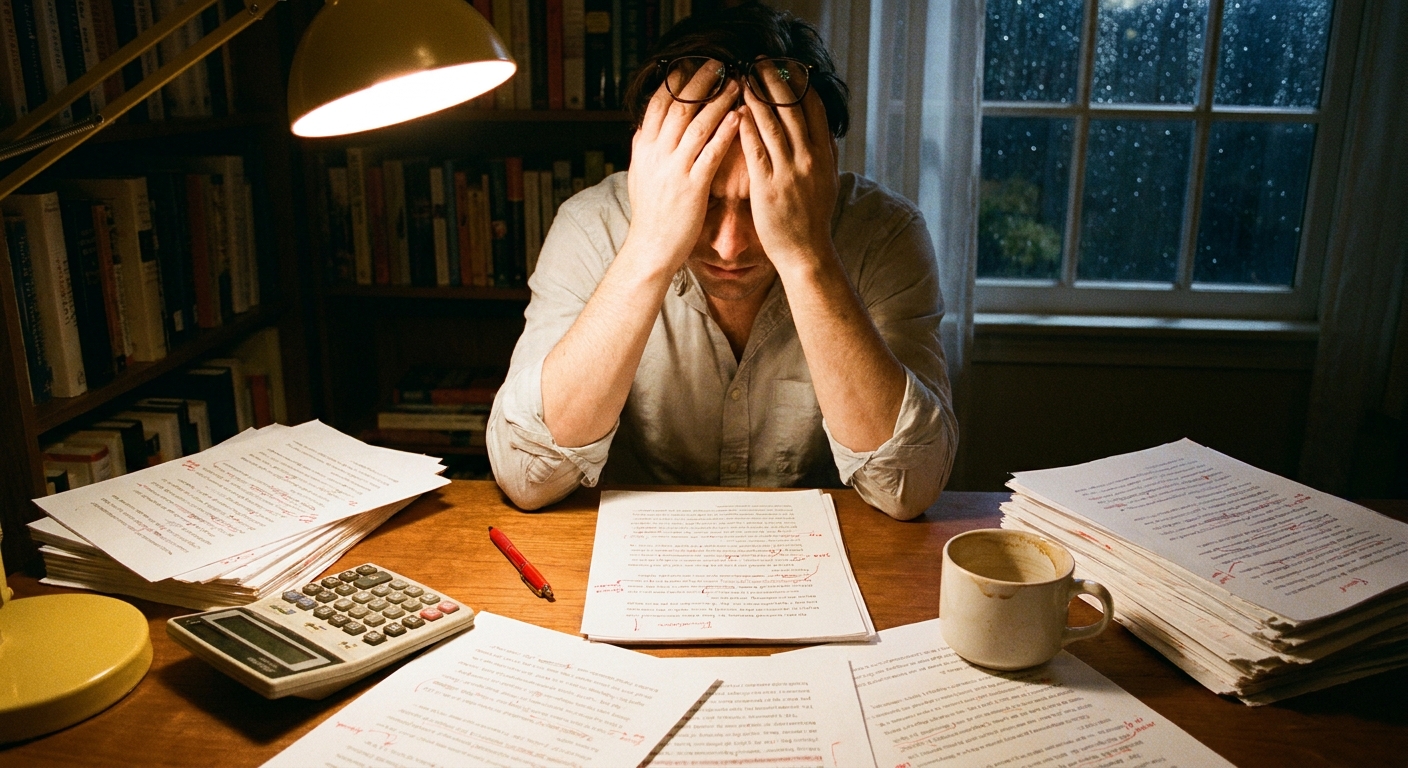
1) The Wicked Bible
The typo: A 1631 printing of the King James Bible reportedly left out the word “not” from the commandment “Thou shalt not commit adultery.”
The accidental meaning: The Bible appeared to endorse adultery. That is one way to spice up a church reading plan.
The cost: The printers (often cited as Robert Barker and Martin Lucas) were fined and disgraced, and many copies were reportedly recalled or suppressed. Surviving copies became rare, infamous collector’s items.
Why it matters: One missing “not” turns a moral law into a scandalous suggestion. If you ever doubt the importance of copyediting, remember that entire reputations have been kneecapped by three letters.
Read more: The story is widely discussed in Bible-history circles, including at the British Library.
2) Mariner 1 and one tiny error
The typo: In 1962, NASA’s Mariner 1 spacecraft was destroyed shortly after launch due to a guidance failure. This story often gets retold as “a missing hyphen,” but more careful accounts describe a small mistake in the guidance equation’s transcription or implementation. The exact punctuation or notation varies by source, but the theme is consistent: a very small error, in a very unforgiving system.
The accidental meaning: The mission guidance logic handled the signal incorrectly, the vehicle veered off course, and it had to be terminated.
The cost: Frequently reported at around $18 million at the time, though the precise figure depends on what is counted.
Why it matters: This is the ultimate cautionary tale: tiny characters can have big consequences when a single character is steering the mission.
3) The “dord” dictionary word
The typo: In 1934, Webster’s Second New International Dictionary accidentally included a fake word: “dord”, defined as a synonym for “density.” It was not a prank. It was a filing and abbreviation mix-up that escaped into print.
The accidental meaning: Suddenly, English had a new word. It even looked plausible, which is always how trouble starts.
The cost: Not “rocket money,” but not nothing either. It led to errata work, editorial cleanup, and the mild horror of realizing a nonsense word can sit in a respected reference book for some time before someone punts it out the door.
Why it matters: Once an error lands in a respected reference book, it gains authority by osmosis. People quote it, teachers repeat it, and the typo starts strutting around like it pays rent.
4) Legal language landmines
The slip: Sometimes the priciest “typo stories” are not even typos. They are tiny details that function like typos: a stray symbol, a missing negative, a formatting mark, or a clause that two humans interpret two different ways.
The accidental meaning: The kind that makes lawyers sit up straight and start circling words like they are hunting truffles.
The cost: Potentially millions in litigation, delays, and settlement pressure, depending on what the clause touches.
Why it matters: A typo in a novel might make a reader chuckle. A typo-adjacent slip in legal language can decide who owns what, who pays whom, and who is allowed to do anything ever again.
If you enjoy punctuation chaos in the safe-to-laugh-at way, you will like our piece on how one comma can cause total chaos.
5) Numbers in public notices
The mistake: Local papers and official notices are full of names, addresses, dates, and dollar amounts, and they are often produced on tight deadlines. That is a recipe for mistakes.
The accidental meaning: Wrong dates can invalidate notices in some jurisdictions. Wrong addresses can send people to the wrong place. Wrong numbers can create confusion, complaints, and the kind of phone calls that start with a long sigh.
The cost: Re-running notices, administrative delays, and in some cases legal complications.
Why it matters: There is a whole category of “boring” typos that become very exciting the moment they affect the real world. Nothing sharpens proofreading skills quite like realizing your error has a public record.
6) When formatting lies
The mistake: Not all typos are spelling. Some are formatting errors that slip into print: accidental ALL CAPS, missing italics, swapped headings, or a stray line break that changes what a sentence seems to say.
The accidental meaning: Suddenly a quiet line becomes a shout. A quote looks like a headline. A disclaimer looks like a promise.
The cost: Reprints, brand embarrassment, and occasionally complaints that take longer to answer than it would have taken to proofread properly in the first place.
Why it matters: Meaning is not only letters. It is emphasis, layout, and what the eye thinks it is seeing at speed.
7) Book typos and free comedy
Now for my favorite genre: the typo that does not bankrupt anyone but does make readers snort tea.
- Character names that mutate: A “Philip” becomes a “Phillip,” then becomes a “Pip,” and suddenly it looks like the author is running a witness-protection program.
- Unfortunate word swaps: “He sighed in relief” becomes “He sighed in belief.” A spiritual journey, apparently.
- Missing words that turn poetic: “She gave him a look of pure disappointment” becomes “She gave him a look of pure.” Pure what? Pure judgment. Pure menace. Pure dairy product. The mind wanders.
The cost: Usually none beyond a bruised ego and a second printing that quietly fixes everything while pretending it was always fine.
Why it matters: Readers notice. They always notice. Even if they do not write in, they will point it out to a friend with the glee of someone who has found a four-leaf clover made of embarrassment.
8) The apology tour
The mistake: A slip in a big campaign or high-visibility publication. Sometimes it is a spelling error, sometimes it is a wrong number, and sometimes it is a single word that turns a harmless sentence into a public relations bonfire.
The accidental meaning: Anything from “we are careless” to “we accidentally insulted an entire demographic.”
The cost: This is where money really leaks out: pulled ads, reprints, staff hours, brand damage control, and sometimes refunds or replacements. The typo is cheap. The cleanup is not.
Why it matters: You do not just pay to fix the words. You pay to restore trust.
How do typos get this far?
People like to imagine typos sneak in like cartoon burglars, wearing striped shirts and carrying little sacks labeled “Oops.” In reality, they get in because of very normal things:
- Human eyes auto-correct. Your brain reads what it expects, not what is there.
- Deadlines squeeze the checking time. Proofreading is often the first thing sacrificed to the altar of “we needed it yesterday.”
- Spellcheck misses real words. “From” and “form” are both valid. That is the problem.
- Too few sets of eyes. One person can miss what three people catch.
Typos that flip meaning
If you like language mishaps, these are the classic meaning-flippers to watch for:
- Negatives: missing “not,” “never,” or “no” (the Wicked Bible is the patron saint of this).
- Homophones: “public” vs “pubic,” “form” vs “from.” The keyboard is innocent. The results are not.
- One-letter swaps: “cost” vs “coat,” “angel” vs “angle,” “trial” vs “trail.” You only need one key to ruin a day.
- Punctuation: commas, apostrophes, and quotation marks can change what a sentence promises, owns, or implies.
For more clean, family-friendly wordplay fun, wander through Funny English or warm up with a few Puns and Jokes.
FAQ
What is the most expensive typo ever?
It depends on what counts as a “typo” and how reliably the cost is documented. Big-ticket contenders often come from engineering, finance, or legal text where a tiny error can trigger massive consequences. Mariner 1 is one of the most famous stories in that category, even if the shorthand “missing hyphen” version is oversimplified.
What is the funniest typo in published history?
My vote, purely on shock value, is the Wicked Bible’s missing “not.” It is the kind of mistake that makes you laugh, gasp, and clutch your pearls all at the same time.
Why do companies still make typos with all our technology?
Because technology checks spelling, not intent. If the typo forms a real word, software often shrugs and says, “Looks fine to me,” while humans are busy reading what they meant to type.
A final thought
I love typos the way I love a bad pun: they remind us language is a human activity. Messy, clever, occasionally expensive, and usually funnier than anyone planned.
And if you spot a typo in this piece, please know I wrote it with the confidence of a man who does crosswords in ink and then immediately regrets it.
If you want to know more about me and my lifelong feud with perfectly good erasers, you can find me over on my author page.