

At my childhood dinner table, puns were served alongside potatoes. So when a teen in my orbit recently called a perfectly normal moment “so unserious,” my first instinct was to ask if we needed to involve a doctor, a judge, or both.
Modern internet slang moves fast, but most of it is just playful shorthand: quick jokes, exaggerated reactions, and new labels for feelings humans have had forever. This parent guide translates the clean, everyday terms you are most likely to hear from TikTok and YouTube, with the kind of plain-English examples you can actually use at the breakfast table.
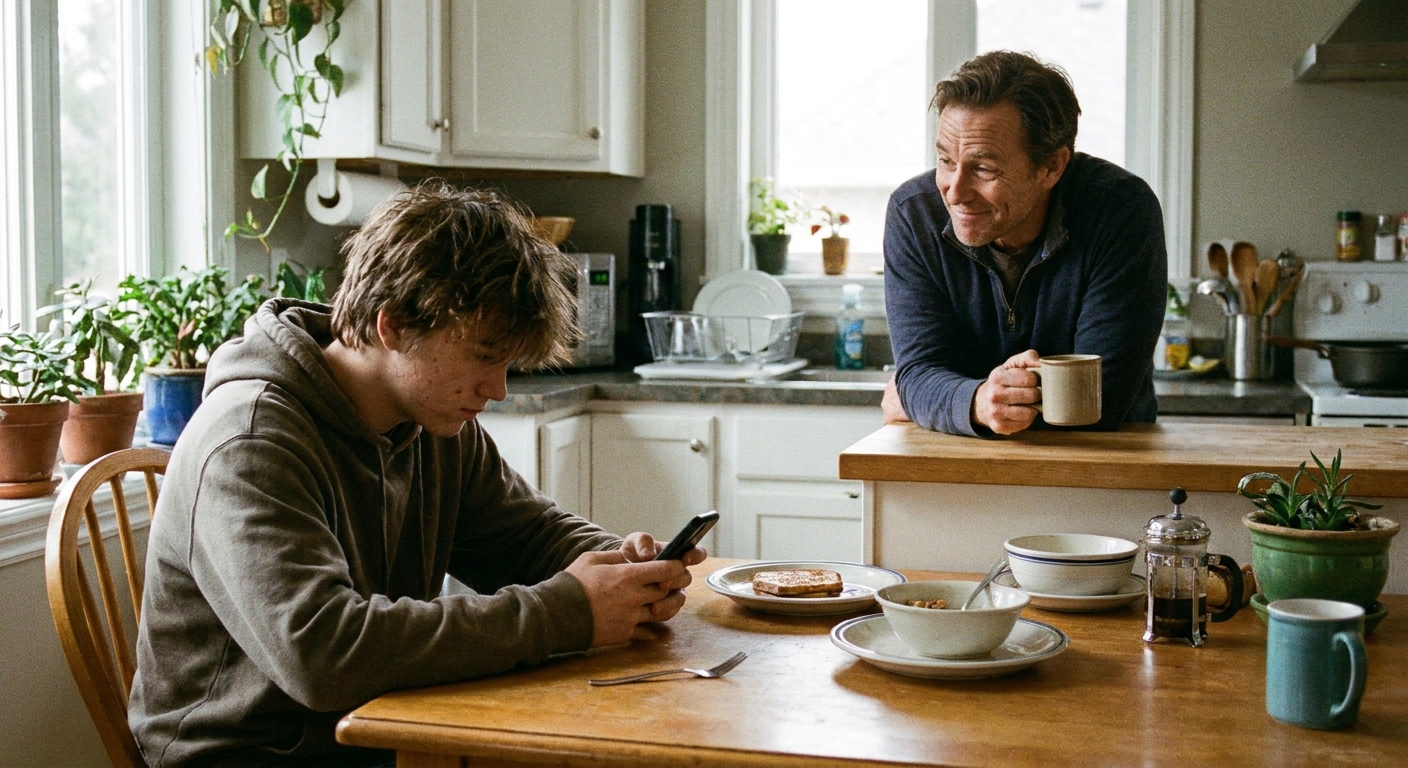
How to read teen slang calmly
Before we jump into the dictionary, here are three sanity-saving rules I wish someone had taped to my fridge:
- Slang is tone, not code. Most words are just mood markers: impressed, joking, annoyed, embarrassed.
- Context beats definitions. The same word can mean praise or sarcasm depending on the situation.
- When in doubt, ask like a human. “I’ve heard that word. What does it mean when you say it?” works better than “Young person, define your vocabulary at once.”
One more thing that saves a lot of confusion: slang varies by region, friend group, and platform. Meanings drift. Today’s “everyone says this” can be next month’s “please never say that again.”
If you want a broader tour of pop culture language, our Pop Culture guide is a good place to roam.
Clean Gen Z slang dictionary
These are family-friendly terms you’re likely to hear a lot online, plus a few that come and go as trends. I’m focusing on the meanings you’re most likely to encounter in everyday conversation.
1) “So unserious”
Meaning: Not to be taken seriously. Goofy, chaotic, or hilariously off-track.
How it’s used: A reaction to something that is ridiculous on purpose, or someone acting like consequences are optional.
- Example: “He brought a karaoke mic to the group project meeting. So unserious.”
Parent translation: “They’re being ridiculous” (or “They’re not taking this seriously”).
2) “No cap”
Meaning: “I’m not lying,” or “for real.”
How it’s used: Often added to emphasize honesty or surprise.
- Example: “That pizza was the best, no cap.”
Parent translation: “Honestly.”
3) “Bet”
Meaning: “Okay,” “deal,” or “sounds good.”
How it’s used: Agreement, often brisk and confident.
- Example: “Pick you up at 7?” “Bet.”
Parent translation: “Sounds good.”
4) “Slay”
Meaning: You did something really well. Big compliment.
How it’s used: Praise for an outfit, performance, or clever comeback.
- Example: “You slayed that presentation.”
Parent translation: “You crushed it.”
5) “It’s giving …”
Meaning: “It has the vibe of…” or “it reminds me of…”
How it’s used: A quick way to label the mood of something.
- Example: “That playlist is giving road trip.”
Parent translation: “It feels very…”
6) “Vibe” and “vibing”
Meaning: The mood. Also, quietly enjoying something.
How it’s used: “Good vibes” means the atmosphere feels pleasant.
- Example: “I’m just vibing.”
Parent translation: “I’m relaxing” (or “I’m enjoying this”).
7) “Low-key” and “High-key”
Meaning: Low-key is “kind of” or “secretly.” High-key is “very” or “obviously.”
How it’s used: To soften or intensify a statement.
- Example: “I low-key love that cheesy movie.”
- Example: “I high-key need a nap.”
Parent translation: “Honestly…” and “Seriously…”
8) “Rizz”
Meaning: Charisma, especially the ability to charm someone.
How it’s used: Usually teasing, sometimes admiring.
- Example: “He’s got rizz.”
Parent translation: “Smooth.”
9) “NPC”
Meaning: Short for “non-player character.” Used to describe someone acting robotic, oblivious, or like they’re on autopilot.
How it’s used: Sometimes self-mocking, sometimes an insult. It can be dehumanizing when aimed at a real person, so tone and target matter.
- Example: “I was such an NPC today, I walked into the wrong classroom.”
Parent translation: “My brain was on autopilot” (or “I was zoned out”).
If your household enjoys game language in general, you might also like 15 hilarious video game translation fails and why they happened.
10) “Main character energy”
Meaning: Someone is acting confident, stylish, or like life is their movie.
How it’s used: Usually playful praise, sometimes gentle teasing.
- Example: “She walked in with main character energy.”
Parent translation: “Big confident entrance.”
11) “Glow up”
Meaning: A noticeable improvement in appearance, style, confidence, or habits.
How it’s used: Often celebratory.
- Example: “He had a glow up over the summer.”
Parent translation: “A real improvement.”
12) “Bussin”
Meaning: Really good, usually (but not only) about food.
How it’s used: High praise, frequently comedic.
- Example: “This chicken is bussin.”
Parent translation: “Delicious” (or “That’s awesome”).
13) “Mid”
Meaning: Mediocre. Not impressive.
How it’s used: Quick, slightly dismissive review.
- Example: “That sequel was mid.”
Parent translation: “Meh.”
14) “Ate” and “Ate and left no crumbs”
Meaning: Did amazingly well. Total win.
How it’s used: Big compliment, often dramatic on purpose.
- Example: “You ate that performance.”
Parent translation: “Nailed it.”
15) “Based”
Meaning: Admiring approval for being confident, bluntly honest, or not following the crowd.
How it’s used: “Based take” can also be an ideological thumbs-up in some online spaces, including around political or controversial opinions. If you’re not sure what someone is endorsing, this is a good one to ask about.
- Example: “You said you like that old band? Based.”
Parent translation: “Respect” (or “Fair point”).
16) “Sus”
Meaning: Suspicious. Seems off.
How it’s used: Joking accusation, sometimes serious side-eye.
- Example: “You’re being sus. Why are you smiling at your phone?”
Parent translation: “That’s questionable.”
17) “The ick”
Meaning: A sudden feeling of disgust or cringe about something small.
How it’s used: Often about dating, but it shows up everywhere.
- Example: “I got the ick when he clapped when the plane landed.”
Parent translation: “An instant turn-off.”
18) “Delulu”
Meaning: Delusional, usually used jokingly about unrealistic optimism.
How it’s used: Self-deprecating humor or teasing a friend.
- Example: “I’m being delulu thinking I can finish this project in one hour.”
Parent translation: “Wildly optimistic.”
19) “Girl math” and “Boy math”
Meaning: A joking way to describe silly, inconsistent logic used to justify something.
How it’s used: Comedy, but it can land as sexist or just plain annoying even when “joking.” I’d file this under “understand it,” not “repeat it at relatives.”
- Example: “It was on sale, so it’s basically free. Girl math.”
Parent translation: “That’s funny logic.”
20) “Roman Empire” (as a phrase)
Meaning: Something you think about far more often than anyone would expect.
How it’s used: A humorous way to admit an ongoing obsession.
- Example: “That one awkward text from 2019 is my Roman Empire.”
Parent translation: “My recurring thought.”
For more language that sneaks into everyday speech, see From ‘D’oh’ to ‘Bazinga’: TV catchphrases we all speak now.
21) “Touch grass”
Meaning: A blunt suggestion to log off and go outside.
How it’s used: Usually teasing someone who is overinvested online.
- Example: “You’ve been arguing about that game for two hours. Touch grass.”
Parent translation: “Go get some fresh air.”
22) “It’s not that deep”
Meaning: “It’s not that serious,” or “you’re overthinking.”
How it’s used: Can calm a situation, or dismiss feelings. Context matters.
- Example: “I forgot to like the post. It’s not that deep.”
Parent translation: “Let’s not overthink it.”
23) “Cook” and “Let them cook”
Meaning: Let someone continue because they’re doing something impressive or are about to make a good point.
How it’s used: Encouragement, sometimes ironic.
- Example: “Wait, let her cook. That idea is actually smart.”
Parent translation: “Let them finish.”
24) “W” and “L”
Meaning: W is a win. L is a loss.
How it’s used: Quick scoring of everyday events.
- Example: “Free dessert? That’s a W.”
- Example: “Missed the bus. L.”
Parent translation: “Win” and “oops.”
25) “Simp”
Meaning: Someone who is overly devoted or tries too hard to impress someone, usually romantically.
How it’s used: Often teasing, sometimes mean. Worth keeping an ear on.
- Example: “He’s simping in the comments again.”
Parent translation: “Trying a bit too hard.”
26) “POV”
Meaning: Point of view. Used to set up a scenario, like a mini skit.
How it’s used: “POV: you are…” sets the scene for a joke.
- Example: “POV: you open the fridge for the fifth time.”
Parent translation: “Imagine this situation.”
How to use slang naturally
Slang is like hot sauce. A tiny amount adds flavor; too much and everyone reaches for water.
- Use it sparingly. One well-timed “W” can be funny. A full paragraph of slang is a cry for help.
- Mirror, don’t mimic. If your teen says “low-key,” it’s fine to reply with “low-key” once. Not ten times.
- Ask for the sentence test. “Can you use it in a normal sentence?” teaches meaning without a lecture.
- Don’t weaponize slang. Using “touch grass” during an argument will not improve family harmony.
For more clean language fun that works across generations, I keep a soft spot for classic wordplay, too. Our guide to Puns and Jokes is basically my natural habitat.
Quick replies that keep it friendly
If you want a few ready-to-go lines that don’t make you sound like you’re taking attendance:
- If they say: “That’s bussin.” You can say: “Bussin as in actually good, or are we being dramatic?”
- If they say: “No cap.” You can say: “No cap, you swear?”
- If they say: “That’s based.” You can say: “Based how? Like brave, or is this an online thing I’m missing?”
Slang red flags to notice
This article sticks to family-friendly terms, but here’s the practical truth: sometimes you’ll hear a word that sounds harmless but is being used to tease, exclude, or shame.
- “NPC,” “mid,” and “simp” can be used as put-downs. If they’re aimed at a specific person repeatedly, it’s worth a gentle check-in.
- Pay attention to who’s laughing. Jokes that only work because someone is the target are different from jokes that everyone shares.
- Ask what the word does in the conversation. “Are you joking with your friend, or about your friend?” is a useful distinction.
Mini FAQ
Is Gen Z slang the same as internet slang?
There’s overlap. Gen Z slang often spreads through the internet first, but plenty of internet slang is older, gaming-based, or community-specific.
How do I keep up without living on TikTok?
You don’t have to. Learn the repeat offenders, ask for context, and accept that new words will keep appearing like socks in the laundry: mysteriously and in great numbers.
What should I say when I don’t understand a term?
Try: “I haven’t heard that one. What does it mean when you say it?” It invites explanation without turning the moment into a courtroom drama.
Can I use these words at work?
Some, yes. “Vibe,” “low-key,” and “POV” are fairly safe in casual settings. Anything that can sound like an insult, like “mid” or “NPC,” is best kept out of emails. We have more on that in Office-appropriate wordplay in work emails.
A closing note from a pun collector
Slang can sound like a different language, but the goal is usually the same as it was at my family dinner table: get a laugh, show belonging, and make ordinary moments feel a little more dramatic.
If you want to keep exploring the lighter side of language with me, you can find my other articles at my author page. I can’t promise you’ll never cringe again, but I can promise we’ll do it cleanly.