

In my childhood home, “pass the potatoes” was never just a request. It was a setup. The dinner table was a pun-powered stage, and the collective groan was our standing ovation. So when I say modern word games have come a long way since classic tile-laying and frantic letter-grabbing, I mean it affectionately.
Below are ten of my favorite modern, family-friendly wordplay board games and party games, the kind that get the word nerds and the “I hate spelling” crowd laughing at the same time. I’m focusing on games that feel fresh, play well with mixed ages, and go beyond the Scrabble and Boggle lane into clues, pop culture vibes, and delightful linguistic chaos.
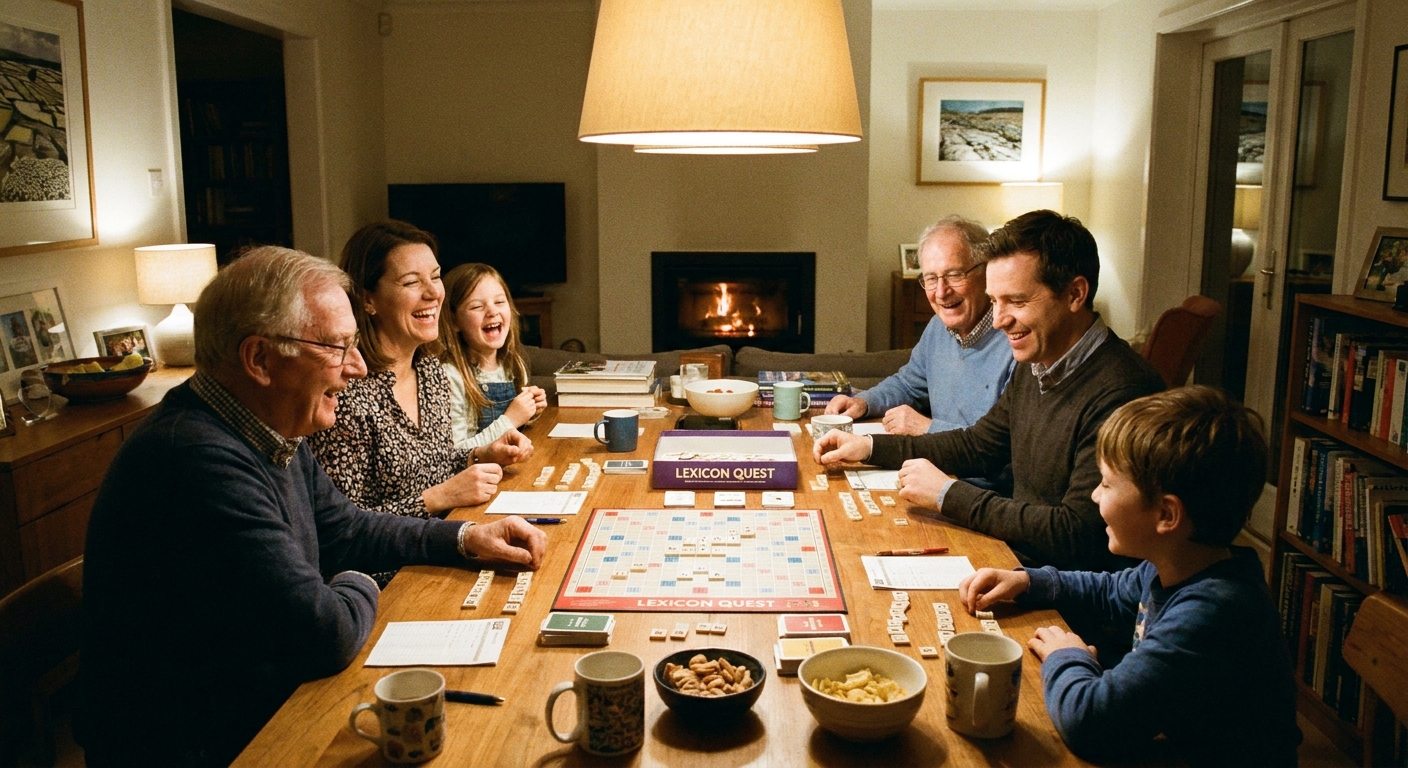
Quick picks
- Best for big laughs: Telestrations
- Best modern Scrabble-adjacent: Letter Tycoon
- Best for quick rounds: Anomia
- Best for teams: Codenames
- Best for “how is that even legal” word building: Paperback
The 10 best modern wordplay board games
1) Codenames
What it is: A team-based clue game where one person gives a single-word clue plus a number, and teammates try to guess the right words on the table without accidentally selecting the other team’s words, or worse, the assassin.
Why it works for families: Simple rules, sneaky wordplay. Clues turn into tiny logic puzzles, and everybody gets a moment of feeling brilliant, even when the clue collapses like a badly constructed soufflé.
Best for: It shines when you can split into two teams. If you want a tighter player count, Codenames: Duet exists for two players.
Time: About 15 to 30 minutes.
Ages and notes: Great with older kids and up who can handle abstract clues. With younger kids, I’ve had success allowing one gentle hint per round if the clue lands with a thud.
My favorite moment: When a clue like “Dinosaur 2” somehow convinces your uncle that “LAWYER” is a prehistoric creature. Honestly, who am I to argue.
2) Just One
What it is: A cooperative word guessing game. One player tries to guess a secret word while everyone else writes a single-word clue. Duplicate clues get erased, so the group must think alike, but not too alike.
Why it works for families: Cooperative play keeps things light, rounds move quickly, and the duplicate rule creates instant comedy without relying on edgy content.
Best for: Mixed ages and mixed competitiveness, especially when you want “one more round” energy.
Time: About 20 minutes (and then another 20, because you will say “last one” and not mean it).
Ages and notes: Reading and spelling matter a little, but the table can help. If someone struggles with writing, let them whisper their clue to a teammate who writes it down.
3) Letter Tycoon
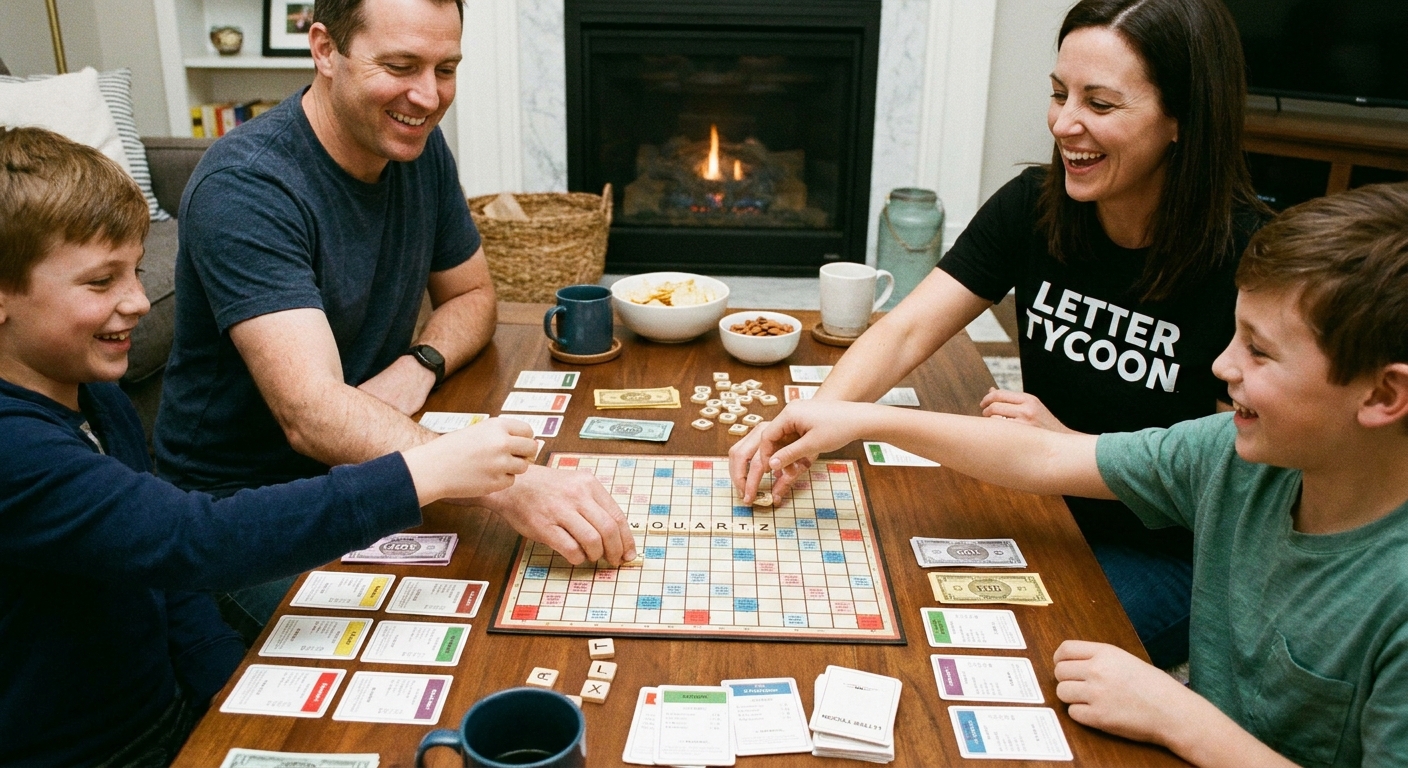
What it is: A modern word-building game where you buy letters, build words, and earn money when other players use letters you own. Think Scrabble-style word making, plus a light economy that keeps everyone involved.
Why it works for families: Vocabulary helps, but it does not feel like a spelling exam. The money twist also means a strategic player can stay competitive even without a giant dictionary brain.
Best for: Families who like Scrabble but want less board paralysis and more momentum.
Time: Roughly 30 to 45 minutes.
Ages and notes: Better with tweens, teens, and adults who can track coins and letter ownership. The “you get paid when someone uses your letters” part is the main hook, but it only triggers in the game’s defined way, not every single time a letter appears in the wild. For younger kids, try open-table advice and a slower pace.
4) Anomia
What it is: A rapid-fire card game where you must blurt out an example of a category when your symbol matches another player’s. Sounds easy until your brain turns into a screensaver.
Why it works for families: The comedy comes from pressure and word association, not punchlines. Rounds stay short, too, which keeps the table from getting cranky.
Best for: People who enjoy word association and do not mind a little friendly chaos.
Time: 10 to 20 minutes.
Ages and notes: Works best once players can read categories quickly. If the timer vibe stresses someone out, play open-handed and allow a beat of thinking time.
Warning from a man who has learned the hard way: Under pressure, you will forget the existence of fruit. All fruit. Every last one.
5) Telestrations
What it is: Telephone, but with drawing and guessing. You write a phrase, the next person draws it, the next person guesses the drawing, and so on until the final reveal.
Why it works for families: Wordplay goes visual here. Misinterpretations pile up like a game of whispers that got replaced with stick figures. Even the non-artists get big laughs because the point is not to draw well, it is to draw understandably, which is much harder.
Best for: Larger groups are where it really sings. Player limits vary by edition, so check the box, but if you have a crowd, this one earns its seat at the table.
Time: About 20 to 30 minutes per round.
Ages and notes: Great across generations because drawing levels the playing field. For younger kids, choose simpler prompts and skip anything that requires niche spelling.
Clean-laugh factor: Very high. The jokes are accidental, which is the most family-friendly kind.
6) Taboo
What it is: Get your team to guess a word without using a list of forbidden clue words. Simple, classic, and still excellent.
Why it counts as modern family night material: Even if it has been around a while, it plays like a modern party game: fast rounds, constant laughter, and lots of near-misses.
Best for: Teams, big groups, and families that enjoy lively talking games.
Time: Around 20 to 30 minutes, or as long as your family can politely pretend not to be competitive.
Ages and notes: Card content can vary by edition. If you are playing with younger kids, pre-screen a small stack or make a “kid pile.”
Colin’s house rule suggestion: Keep a small “no yelling directly into Grandma’s ear” zone. It preserves both the game and the family tree.
7) So Clover!
What it is: A cooperative clue-connection game. You arrange word cards around a clover-shaped board and write connecting clues so others can reconstruct your layout.
Why it works for families: Gentle, clever, and satisfying. Everyone gets a turn to be creative without feeling like they are performing under a spotlight.
Best for: Families that like calm, brainy fun rather than loud party energy.
Time: About 30 minutes.
Ages and notes: Best once players can read comfortably. Younger players can still help by brainstorming associations with an adult writing the final clues.
Quick example turn: Say your two words are “SNOW” and “GLOBE.” A connecting clue like “shake” is perfect: simple, vivid, and just ambiguous enough to be fun.
8) Wavelength
What it is: A team game about guessing where a clue lands on a spectrum, like “Hot to Cold” or “Common to Rare.” The clue-giver knows the target zone and gives one clue to help the team place the dial.
Why it works for families: It sparks hilarious discussions and reveals everyone’s internal definitions. You learn that your cousin thinks “ketchup” is spicy, and your dad thinks “jazz” is a type of weather.
Best for: A flexible group game that can run with a few people or a full room, depending on how you split teams. Official player counts vary by edition, so treat the box as the final authority.
Time: About 30 to 45 minutes.
Ages and notes: Best with older kids, teens, and adults who enjoy debating nuance. If your group hates arguing, set a “one-minute max” discussion limit and keep it breezy.
9) Paperback
What it is: A deck-building game that uses letters. You build your letter hand, then form words to score points and buy better letters and abilities.
Why it works for families: It scratches the word-nerd itch while still feeling like a modern tabletop game. Strategy matters, and the little combos feel great when they click.
Best for: Families with a couple of gamers at the table, or anyone who likes “words plus strategy.”
Time: Around 45 minutes.
Ages and notes: This one is “gamer-light,” meaning it takes a bit more explaining than a pure party game. Better for confident readers and spellers. If you have a mixed table, consider a gentle handicap: younger players start with one extra card or get a free redraw once per game.
10) Dixit
What it is: A storytelling and interpretation game. One player gives a clue for a surreal image card, others submit cards that fit, then everyone votes on the original.
Why it belongs on a wordplay list: The clue is everything. The best clues flirt with double meanings, pop culture nods, and poetic phrasing without being too obvious. Somehow, it manages to be gentle and competitive at the same time.
Best for: Families that like imagination, creative clues, and a game night that feels a little like group storytelling.
Time: About 30 minutes.
Ages and notes: Works beautifully with mixed ages because there is no “right” vocabulary list to memorize. If kids are playing, steer clues away from references only adults will get.
How I picked these
- Family-friendly humor: The laughs come from language and interpretation, not crudeness.
- Easy to teach: You should be playing in under 10 minutes, not studying like it is finals week.
- Replay value: Different players and different clues keep it fresh.
- Beyond just spelling: Word association, clues, meanings, and miscommunication count as wordplay too.
- Mostly party-light: Most of these are easygoing party games, with Paperback and Letter Tycoon leaning a little more “game night” than “instant silliness.”
Small reality check: Editions vary. Player counts, prompt difficulty, and content can shift depending on which version you own, so treat any number on this page as a practical guideline, not an engraved tablet.
Build your wordy game night
Match the mood
- Want something loud and silly? Try Anomia or Telestrations.
- Want team strategy? Go with Codenames or Wavelength.
- Want calm and clever? Pick So Clover! or Dixit.
- Want word building with a twist? Letter Tycoon or Paperback.
Keep it inclusive
If your table has a wide range of ages, cooperative games like Just One and So Clover! are lifesavers. Nobody gets knocked out early, and the group can gently help younger players find good clues.
Comfort and accessibility tips
A few tweaks can make word games friendlier for everyone. For dyslexia or slower readers, pick games where the table can talk through answers (Just One, Wavelength) or where drawing and interpretation carry the fun (Telestrations, Dixit). If timers make anyone freeze, agree up front to ignore them, extend them, or switch to cooperative scoring. The goal is laughter, not a spelling bee with snacks.
Add a tiny dose of wordplay
If your family enjoys little language detours, sprinkle in mini-challenges like “best clean double meaning of the night” or “most dramatic misheard clue.” If you want more of that sort of thing, I keep a stash of clean wordplay ideas over in our Puns and Jokes guide.
FAQ
What is the best modern word game like Scrabble but newer?
Letter Tycoon is my favorite answer because it still rewards making solid words, but the letter economy keeps it punchy and interactive.
What is the funniest wordplay game for a big group?
Telestrations is hard to beat for guaranteed laughs, especially once you have enough players for a proper before-and-after reveal chain. Just check your edition’s player limit.
Any good choices for families who hate being put on the spot?
So Clover! and Dixit are gentler. You still get clever language moments, but with less “perform now” pressure than a timer-based party game.
Where can I find more pop culture flavored language fun?
Our Pop Culture guide is where I stash the wordy side of movies, TV catchphrases, and the kinds of phrases that sneak into everyday speech. If you want a specific rabbit hole, I also enjoyed writing From Doh to Bazinga: TV Catchphrases We All Speak Now.
One last thing
If you want my truest, most scientifically rigorous family-game-night advice, here it is: keep snacks within reach, keep the rules explanation short, and never underestimate the power of a well-timed groan. In my experience, a synchronized groan is basically a standing ovation you can do while seated.
Happy playing, and may your clues be clear, your drawings be questionable, and your final reveals be gloriously, harmlessly ridiculous.
More of my language mischief lives over on my author page.