

I grew up in a house where “language” was treated like a sport. Not the fussy grammar kind, either. The dinner table was a proving ground for puns, riddles, and the occasional groan-worthy substitution when someone almost said a word that would have earned them a pointed look from my mother.
So when I first noticed sci-fi doing the same trick, I felt instantly at home. Spaceships may travel faster than light, alien empires may rise and fall, but the real miracle is this: characters can express real frustration without dragging your viewing party into “everyone cover your ears” territory.
This is your guide to fictional swear words, how they work, why audiences love them, and the clever little rules writers use to make them feel satisfying instead of silly.
What counts as a fictional swear word?
A fictional swear word is a made-up bit of profanity (or a “near profanity”) that does the same emotional job as real-world swearing, but sidesteps real-world taboo words. It is not just a funny insult. It is a pressure valve.
In practice, these come in a few common types:
- Invented stand-ins that sound punchy and close to real profanity, but remain safely fictional.
- In-world oaths, where characters swear “by” something sacred in that universe.
- Foreign-language phrases, including curses and insults, used like code-switching to add texture or intensity.
- Minced oaths and euphemisms that feel like swearing, but are technically mild (think “what in the stars” said with real conviction).
One quick distinction that helps: an in-world oath points to your universe’s beliefs (“by the saints”), while a minced oath is a “cleaned up” cousin of a real-world swear (the linguistic equivalent of putting a hat on a raccoon and insisting it is now respectable).
And yes, there is an art to it. A good fictional swear word should feel like it belongs to the world, roll off the tongue under stress, and be flexible enough to take on different grammatical shapes when the plot goes sideways.
Why sci-fi and fantasy nail network-safe swears
Sci-fi and fantasy have a built-in advantage: they are already asking your brain to accept new rules. New planets, new politics, new technologies, new currencies, new creatures. If a show can convince you that a jump drive works, it can also convince you that people swear differently in that society.
It keeps intensity without tripping standards
Historically, broadcast network standards have been stricter about certain English profanities than cable or streaming. Even now, plenty of creators want a show that families can watch together, or they simply want to keep the focus on story rather than shock value.
Invented profanity gives writers a way to keep the emotional volume high without running headfirst into content restrictions or alienating audiences who prefer cleaner language.
It builds worldbuilding in one syllable
The best fictional swears do double duty. They reveal what a culture values and fears. Are they religious, cursing by gods, temples, and saints? Are they militaristic, swearing by ships and ranks? Do they share an enemy, a mythic catastrophe, a holy day?
That is worldbuilding with no exposition required. Just one stressed-out mechanic muttering a curse while elbow-deep in imaginary wiring.
Hall of fame: fictional swears that work
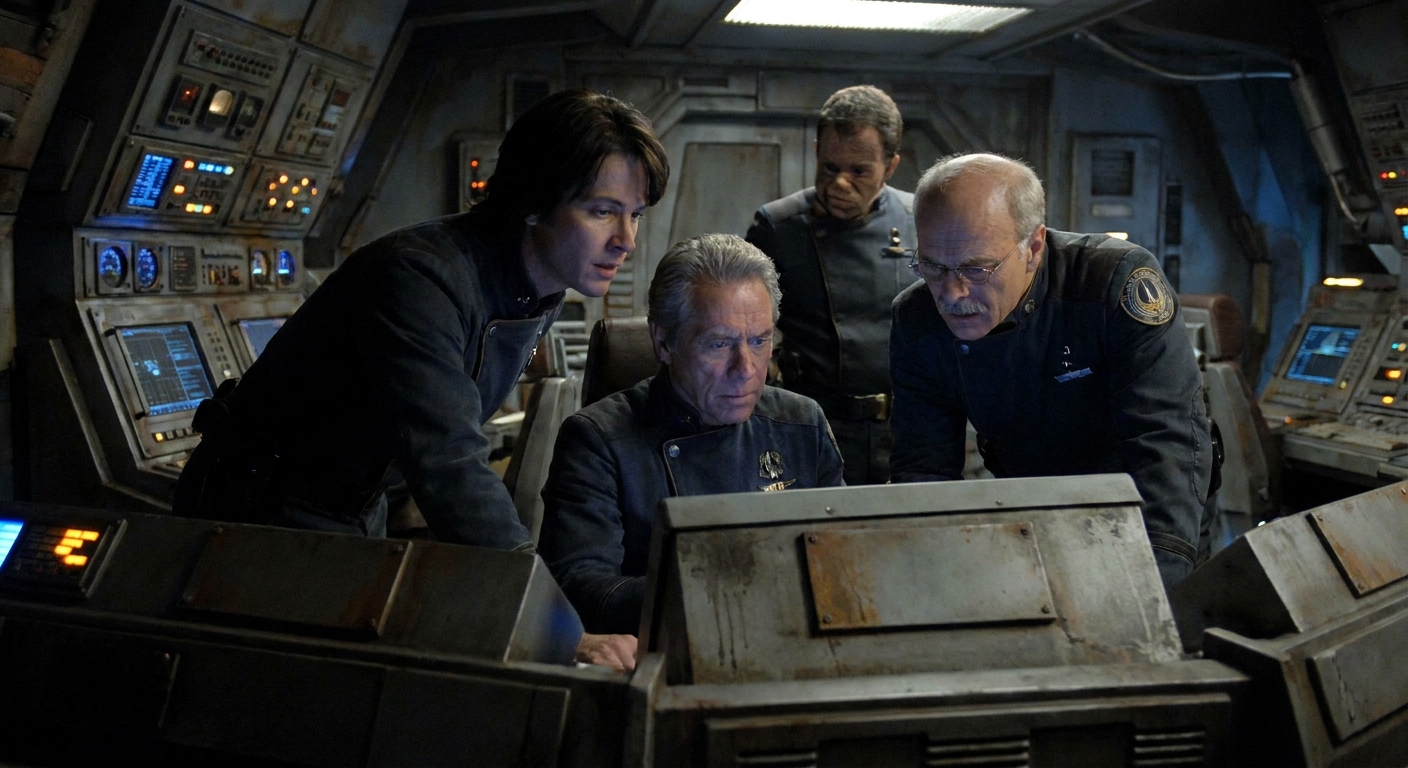
Battlestar Galactica: “frak”
If fictional swearing had a museum, “frak” would be behind glass with a little plaque that reads: “Simple. Versatile. Utterly committed.”
Why it works:
- Phonetic punch: It is short, sharp, and percussive. Perfect for stress.
- Flexible grammar: It can be a verb, noun, adjective, and general-purpose exclamation. The Swiss Army knife of swears.
- Consistent use: The show uses it often enough that it feels normal, not precious.
Firefly: Mandarin phrases, including curses
Firefly took a different route: it uses Mandarin phrases throughout, including expletives and insults, as part of its frontier-future blend. Not every Mandarin line is literally “swearing,” and some of it lands a little oddly to fluent speakers, but the intent is clear: when emotions spike, characters reach for a different register.
Why it works:
- World texture: It reinforces the idea of a blended future culture.
- Emotional honesty: Code-switching is real. People often grab their strongest, most familiar phrasing when they are angry or scared.
- Network-friendly edge: It can carry heat without sounding like standard English profanity to every viewer.
It is a reminder that “family-friendly” does not have to mean “sterile.” It can mean “smartly chosen.”
The Good Place: “fork,” “shirt,” and friends
Not sci-fi in the spaceship sense, but absolutely a cousin in the “invented rules” family. This show turns censorship into a running gag: the afterlife literally will not allow the characters to swear.
Why it works:
- Built into the premise: The profanity filter is a plot device, not just a workaround.
- Comedic rhythm: The substitutions are funny because the characters deliver them with full swear-word energy.
- Catchphrase power: Fans can quote it anywhere without worrying about Grandma’s eyebrow doing that slow rise of judgment.
How writers make fake swears feel real
1) Keep it short and stress-proof
Real swears often seem to be short for a reason: when something goes wrong, people reach for language that is quick to say and hard to misunderstand. A good invented swear is usually one or two syllables, easy to shout, easy to spit out mid-chaos.
2) Give it multiple uses
If a made-up curse can only be said one way, it feels like a novelty. If it can be adapted, it starts to feel like language.
- As an exclamation: “Frak!”
- As an adjective: “This frakking panel…”
- As a noun: “What the frak is that?”
3) Anchor it to the world’s values
In worlds where religion is central, characters swear by saints, gods, heavens, and hells. In worlds where corporations rule, you might hear more bureaucratic oaths and brand-like intensifiers. If the curse reflects what the culture fears or reveres, it feels natural.
4) Let characters say it like they mean it
This is a big one. The most convincing fictional swears are delivered with complete sincerity. Actors sell them with timing, emphasis, and body language. If a character treats it like a “real” swear, the audience follows their lead.
When fictional swears flop
Even a good idea can go sideways. The fastest ways to make a made-up swear feel cringe are surprisingly predictable:
- Too cute: If it sounds like a plush toy brand, it will not land like rage.
- Too many, too fast: A dozen new curses in one episode feels like a glossary attack.
- Inconsistent rules: If it is “forbidden,” but characters say it whenever the script wants a laugh, the audience stops believing in it.
- No cultural anchor: A random syllable with no link to the world’s history, religion, or everyday life tends to float away.
Family-friendly, not friction-free
Let’s be honest: fictional swears are not always squeaky clean in spirit. They are designed to feel like swearing. That is the point. They can also help illustrate how profanity functions socially, without handing kids a set of words that will immediately get them sent to their room.
Still, if you are watching with younger viewers, it helps to remember:
- Intensity matters as much as vocabulary. A made-up swear can still be harsh in tone.
- Context matters. A clean word used aggressively can land like a slap.
- Imitation is real. Kids love repeating catchy nonsense words, especially ones adults clearly react to.
In other words: it is “family-friendly,” not “family-invisible.”
Why fans use fictional swears
People borrow fictional swears for the same reason we borrow TV catchphrases: they are expressive, recognizable, and socially safer than the real thing.
- They reduce awkwardness at work, at school, or around relatives who can hear a whispered curse from three rooms away.
- They signal fandom without requiring a full conversation about lore. One word can be a secret handshake.
- They are fun. Language play is satisfying. I say this as someone who once spent a Saturday happily solving crosswords in pen while everyone else did something sensible.
If you enjoy that kind of everyday language borrowing, you might also like our tour of shared pop-culture phrases in From “D’oh” to “Bazinga”: TV Catchphrases We All Speak Now and the broader Pop Culture guide.
How to invent your own clean sci-fi swears
If you are writing a story, running a tabletop game, or just trying to replace your “parking lot vocabulary” with something that will not horrify passersby, here are a few practical approaches.
Option A: The near-miss sound
Pick a punchy consonant pattern and keep it tight: one syllable, hard ending. The trick is to avoid making it too close to a real swear if you want it to stand on its own.
Option B: The in-world oath
Swear by the sacred thing in your setting. A ship name. A deity. A planet. A historic event. It instantly deepens your world.
Option C: The polite word, used rudely
This is the The Good Place method. Use a harmless noun, but deliver it with full-force emotion.
If you love seeing how meaning shifts based on context, you may enjoy our piece on clean double entendres, where tone and framing do a lot of the heavy lifting.
Quick FAQ
Are fictional swear words “real words”?
In a dictionary sense, sometimes they become real through common use. In a social sense, they are real the moment a community agrees on their meaning and uses them consistently.
Do invented swears make a show feel less mature?
Not automatically. When they are woven into the world and performed sincerely, they can feel more immersive than random real-world profanity that clashes with the setting.
What is the most important rule?
Consistency. One invented swear used confidently beats twelve awkward ones used like decorations.
A final, sincere compliment
When sci-fi does fictional profanity well, it is not just a workaround. It is a little feat of language design. It lets characters vent, lets writers keep their ratings where they want them, and lets the rest of us quote our favorite shows without having to apologize to the nearest grandparent.
And if that is not a beautiful use of the English language, I do not know what the frak is.
For more playful language twists beyond TV and spaceships, visit Funny English and my author page at Colin Carmichael.